NPS vs ELSS for retirement: which one actually wins?
A side-by-side of NPS Tier 1 and ELSS for retirement: tax breaks, lock-in, returns, the NPS annuity trap, and the right answer for different retirement horizons.
In this guide
- 1Decide whether NPS or ELSS is the right vehicle for the retirement goal. NPS (National Pension System) is a government-backed pension scheme with a long lock-in until age 60 and a mandatory annuity purchase at exit. ELSS (Equity Linked Savings Scheme) is a 3-year lock-in equity mutual fund that qualifies for the regular Section 80C deduction. They solve different problems and the right answer depends on whether you need the 80CCD(1B) deduction and whether you can stomach the annuity requirement.
- 2Understand the NPS tax math end-to-end. NPS Tier 1 has three tax benefits stacked: Section 80CCD(1) deduction within the regular ₹1.5L 80C cap, Section 80CCD(1B) deduction up to ₹50,000 over and above 80C, and Section 80CCD(2) deduction from the employer (up to 10% of basic salary for private sector, 14% for government, no cap). At exit, the corpus is split: 60% can be withdrawn tax-free, 40% must be used to buy an annuity that pays monthly pension and is taxable as salary.
- 3Compare the lock-in honestly. NPS Tier 1 cannot be touched until age 60. The only partial withdrawal allowed before 60 is up to 25% of your own contribution (not the employer's, not the returns) for specific reasons: higher education, medical treatment, housing, or child-related expenses. The corpus is fully illiquid for ~30 years if you start at 30. ELSS has a 3-year lock-in per SIP instalment, after which the units are freely redeemable, switchable, or rebalanceable. For investors who want flexibility to react to life events (job change, house purchase, child education), the ELSS lock-in is materially shorter.
- 4Work out the post-tax return comparison. The post-July 2024 tax rules changed NPS taxation at exit: the 60% lump-sum withdrawal is now tax-free only up to ₹5 lakh for non-government employees, and the rest is taxed at your slab rate. The annuity portion is fully taxable as salary. ELSS at exit is taxed at 12.5% LTCG above ₹1.25L annual exemption. The after-tax return math depends heavily on your slab and your holding period.
- 5Decide based on your goal, not on the tax break. The right allocation depends on the gap between your current retirement corpus and your target, the timeline, and whether you need the extra 80CCD(1B) deduction. Most Indian retail investors are best served by an equity mutual fund SIP for the bulk of retirement savings, with a small NPS Tier 1 allocation if they need the extra tax break and can accept the lock-in.
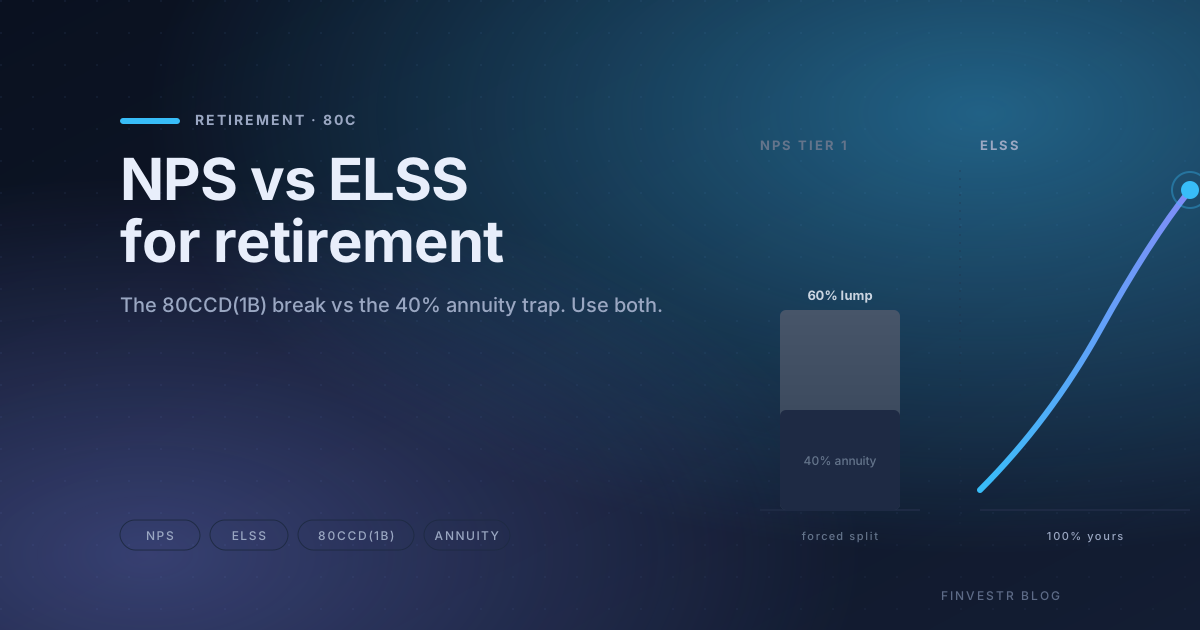
The right answer to "NPS or ELSS for retirement" is almost never "pick one". The right answer is "use both, sized to the tax break and the lock-in you can stomach". The two products solve different problems and live in different buckets of the tax code. Treating them as competitors, as most Indian personal finance coverage does, misses the point.
This post is the 2026 math for a retail investor in India comparing NPS Tier 1 (the only NPS tier that matters for retirement) and ELSS (the only equity MF that qualifies for Section 80C, but not for retirement specifically). With the post-July 2024 tax rules, with the 40% annuity trap, and with the 80CCD(1B) deduction that only NPS gives you. By the end you will know which one to prioritise, how much to put in each, and when the answer changes.
The two products, by the rules
NPS Tier 1 is a government-backed pension scheme run by PFRDA (Pension Fund Regulatory and Development Authority) through seven fund managers (SBI Pension Fund, LIC Pension Fund, UTI Retirement Solutions, HDFC Pension, ICICI Prudential Pension, Kotak Mahindra Pension, Aditya Birla Sun Life Pension). You pick one, pick an asset allocation between equity (E), corporate debt (C), and government securities (G), and your contribution is invested until age 60.
The tax breaks:
- Section 80CCD(1): your own contribution, up to 10% of salary (basic + DA), within the regular ₹1.5L Section 80C cap.
- Section 80CCD(1B): additional deduction of ₹50,000/year, over and above the 80C cap. This is the headline NPS benefit.
- Section 80CCD(2): employer contribution, up to 10% of basic salary for private sector (14% for government), no cap.
ELSS is an Equity Linked Savings Scheme, a diversified equity mutual fund with a 3-year statutory lock-in. It qualifies for the regular Section 80C deduction, ₹1.5L cap shared with EPF, PPF, life insurance, home-loan principal, tuition fees, NSC, ULIP. There is no additional deduction above 80C. ELSS is structurally a multi-cap or flexi-cap fund with a 3-year lock-in.
The annuity trap
The single most important fact about NPS is the 40% annuity requirement at age 60. At exit, NPS forces you to use at least 40% of the corpus to buy an annuity from an IRDA-licensed insurer (LIC, SBI Life, HDFC Life, ICICI Prudential Life). The annuity pays you a fixed monthly pension for life, and is fully taxable as salary at your slab rate.
The annuity rate depends on the insurer and the type of annuity, but the realistic range for a life annuity in 2026 is 6-6.5% per year. That sounds attractive until you work the math on a real corpus.
Worked example. You accumulate ₹1 crore in NPS at age 60. The split:
- 60% lump sum: ₹60L. Of this, ₹5L is tax-free for non-government employees (post-July 2024 rules); the remaining ₹55L is taxed at your slab rate. For a 30% slab retiree, the tax is ₹16.5L, leaving ₹43.5L net.
- 40% annuity: ₹40L. This buys a life annuity paying roughly ₹26,000/year (6.5% of the corpus), or ₹2,167/month. The annuity is fully taxable, so post-tax the monthly pension is roughly ₹1,500-1,700 depending on the slab.
Total NPS outcome: ₹43.5L net lump sum + a monthly pension of ₹1,500-1,700. The corpus is split between capital you control (the lump sum) and a small monthly stream (the annuity). The lump sum is meaningfully smaller than the original ₹1 crore, and the pension is not enough to live on.
The same ₹1 crore in an equity mutual fund at age 60 is yours, in full. You can withdraw it all, run a SWP (Systematic Withdrawal Plan) at ₹50,000/month for 25 years (assuming 6% post-withdrawal return), or pass it to heirs. No annuity obligation, no forced split, no exit tax above the standard 12.5% LTCG.
That is the annuity trap. The 40% you lose to the annuity is the cost of the NPS tax break at contribution. The question is whether the break is worth it.
The tax break, by slab
The 80CCD(1B) deduction saves a 30% slab investor ₹15,600/year in tax (₹50,000 × 31.2% including cess). For a 20% slab investor, ₹10,400/year. For a 0% slab (rare, but possible for retirees or those below the basic exemption), nothing.
The deduction compounds across years. A 30% slab investor who contributes ₹50,000/year to NPS for 25 years saves ₹3.9L in tax over the period. That tax saving, if invested separately at 12% in an equity mutual fund, compounds to ₹40L by year 25.
So the question is: do the NPS product characteristics (lower return, 40% annuity trap, exit tax on the lump sum above ₹5L) justify giving up the ₹40L of compounded tax savings? For most investors, no. The NPS product drag exceeds the tax break benefit.
There is one exception: investors who cannot, by discipline or by circumstance, save the tax saving separately. For those investors, NPS forces the saving into the pension product, which is structurally better than spending the refund. NPS is a great forced-savings vehicle, in the same way that EPF is. If you would otherwise spend the 80CCD(1B) deduction, NPS is better than not having it. If you would invest it, the equity mutual fund wins.
The lock-in, honestly
NPS Tier 1 cannot be touched until age 60. The only partial withdrawal allowed before 60 is up to 25% of your own contribution (not the employer's portion, not the returns) after 3 years of NPS membership, and only for specific reasons: higher education, medical treatment, housing (specifically for a house purchase or loan repayment), or child-related expenses.
ELSS has a 3-year lock-in per SIP instalment. After 3 years, the units are freely redeemable. You can switch to a different ELSS, redeem partially, redeem fully, or continue holding. The lock-in is short and the post-lock-in flexibility is total.
For a 25-year-old who starts NPS today, the corpus is locked for 35 years. For the same person starting an ELSS SIP today, the first instalment is free in 3 years.
The honest framing: the NPS lock-in is exactly what most retirement savers need, because most retirement savers raid long-term equity investments for short-term goals and end up with a small retirement corpus. If you can leave an ELSS SIP alone for 25 years, you do not need the NPS lock-in. If you cannot, NPS forces the discipline.
The caveat: forced discipline at the cost of the 40% annuity trap is a brutal trade-off. The forced discipline of PPF (15-year lock-in, fully tax-free) or EPF (locked until retirement but no annuity trap) is a much better trade. NPS is the worst of both: long lock-in AND annuity trap.
The 2026 split for a 30-year-old
A worked allocation for a 30-year-old in the 30% slab, aiming to retire at 60, with the goal of a ₹6.96 crore corpus (the number from How much you actually need to retire in India for a ₹60K monthly expense, 7% inflation, 25x rule):
- 80% of retirement SIP in equity mutual funds: Nifty 50 index fund + flexi-cap + small-cap, all outside any 80C lock-in. This is the bulk of the corpus and the bulk of the return. The SIP is fully flexible at any point.
- 10% in ELSS: for the Section 80C deduction. The 3-year lock-in is acceptable because the goal is retirement and the units will be held for 25+ years anyway. The 12.5% LTCG at exit is meaningfully better than the post-July 2024 NPS exit tax.
- 10% in NPS Tier 1: for the 80CCD(1B) deduction, capped at ₹50,000/year. This is enough to claim the full deduction without over-allocating to a product with the annuity trap. The contribution can be increased in future years if the employer offers 80CCD(2) and the total package makes sense.
This split uses all three tax breaks, captures the higher equity MF return for the bulk of the corpus, and limits the NPS drag (annuity trap, lower return) to a small allocation.
For investors who already have a large EPF/PPF base and only need the 80CCD(1B) break, the NPS allocation should be exactly ₹50,000/year and not a rupee more. For investors who do not need the extra deduction (lower slab, no tax liability), zero NPS is a defensible answer.
When the answer changes
Three situations where NPS deserves more than 10%:
Government employees. The 80CCD(2) employer contribution is 14% of basic salary for central government employees (vs 10% for private). The employer's contribution goes into the same annuity-on-exit product but the higher contribution rate makes the trade-off more favourable. A central government employee with a 20-year horizon can meaningfully build NPS as a primary retirement bucket.
Investors who cannot save the tax saving. If the alternative to NPS is spending the 80CCD(1B) deduction, NPS is the better outcome. The annuity trap is less bad than not saving at all.
Senior citizens with no other pension. For a 60-year-old with EPF + savings but no other guaranteed income stream, NPS Tier 1 at the exit gives a small but guaranteed monthly pension. The annuity trap becomes a feature, not a bug, for the portion of the corpus the retiree wants to live on.
Three situations where NPS deserves zero:
Low-tax-bracket investors. If you are in the 0% or 5% slab, the 80CCD(1B) deduction is worth ₹0-1,560/year. The annuity trap eats more than that over 25 years.
Investors with a long horizon and high discipline. A 25-year-old who already runs equity mutual fund SIPs without fail does not need NPS. The discipline is already present.
Investors with short retirement horizons. NPS Tier 1 requires staying invested until age 60. If you are 50 and starting NPS now, the corpus has only 10 years to compound, which is not enough to overcome the annuity trap. Equity mutual funds or a balanced advantage fund are the right product.
The takeaway
The right answer to "NPS vs ELSS for retirement" is "use both, sized to the tax break". For most 30-something Indian investors in the 30% slab:
- 80% of retirement SIP in equity mutual funds (the bulk of the return, full flexibility).
- 10% in ELSS for the 80C deduction.
- 10% in NPS Tier 1 for the 80CCD(1B) deduction.
The NPS tax break is worth claiming, but not at the cost of the equity MF return and the 40% annuity trap for the bulk of the corpus. ELSS is a better equity product than NPS for retirement because the return is higher, the lock-in is shorter, and the exit is more flexible. NPS is the right vehicle for the 80CCD(1B) deduction and nothing more, unless you are a government employee or cannot save the deduction on your own.
The full retirement corpus math (how much you actually need, the 25x rule, the inflation-adjusted SIP that gets you there) is in How much you actually need to retire in India. The 80C trade-off between ELSS and PPF (the other 80C option) is in ELSS vs PPF. And the 1-min Goal Check walks through your specific retirement goal with the actual numbers.
What to read next
- How much you actually need to retire in India - the corpus math, with the 25x rule and worked examples.
- ELSS vs PPF - the 80C trade-off between ELSS and PPF.
- How to start investing in mutual funds in India - the 10-minute flow for going from zero to your first SIP.
- Best mutual funds to invest in India 2026 - the pillar shortlist across every category, including ELSS.
- XIRR vs CAGR vs Absolute Returns - the 3 numbers on your CAS, which one is honest.
- Mutual Fund vs FD in 2026 - the FD vs equity MF comparison for the safety sleeve.
- The FinvestR living portfolio - what an actively managed, fully-transparent MF portfolio looks like in practice.
- The monthly mutual fund rankings - the live top-10 in every category, refreshed monthly.
Frequently asked questions
Is NPS better than ELSS for retirement?▾
For most investors, no. The NPS tax break at contribution (Section 80CCD(1B), up to ₹50,000 over the 80C cap) is meaningful, but the corpus at exit is dragged down by two factors: NPS equity funds historically trail equity mutual funds by 2-3 percentage points per year, and 40% of the corpus must be annuitised at age 60, which is fully taxable as salary. ELSS has a shorter 3-year lock-in, a higher long-run return, full flexibility on withdrawal and SWP, and is taxed at 12.5% LTCG above ₹1.25L annual exemption. NPS is only strictly better for investors who need the extra 80CCD(1B) deduction and can stomach the lock-in until 60.
What is the 40% annuity rule in NPS?▾
At age 60, NPS Tier 1 forces you to use at least 40% of the corpus to buy an annuity from an IRDA-licensed insurer (LIC, SBI Life, HDFC Life, ICICI Prudential Life, etc.). The annuity pays a fixed monthly pension for life (or for life with a spouse continuation). You cannot withdraw the 40% as a lump sum. The remaining 60% can be taken as a tax-free lump sum (up to ₹5L, rest taxed at slab for non-government employees post-July 2024). The annuity income is taxable as salary at your slab rate. The 40% rule is the single largest hidden cost of NPS.
How much NPS should I have for the 80CCD(1B) deduction?▾
To claim the full ₹50,000 deduction under 80CCD(1B), contribute ₹50,000/year to NPS Tier 1. Most investors should stop there and route the rest of retirement savings into equity mutual funds. The marginal benefit of additional NPS drops sharply once you have claimed the deduction, because every extra rupee in NPS is subject to the 40% annuity rule and the post-July 2024 exit tax. The minimum NPS to capture the full deduction is the right size for most retail investors.
Can I have both NPS and ELSS?▾
Yes, and most balanced portfolios do. ELSS sits inside the regular ₹1.5L Section 80C cap. NPS Tier 1 gets you ₹50,000 of additional deduction under 80CCD(1B), over and above 80C. The total tax-deductible retirement contribution can therefore be up to ₹2L/year (₹1.5L 80C + ₹50K 80CCD(1B)) plus any 80CCD(2) employer contribution. There is no rule against holding both. The right allocation depends on your tax slab and your retirement horizon, not on whether you can legally hold both.
What happens to NPS if I die before age 60?▾
NPS Tier 1 has a nominee. On the subscriber's death before age 60, the entire corpus is paid to the nominee as a lump sum, with no annuity requirement. This is a meaningful advantage over the standard NPS exit (which forces 40% annuitisation at age 60). The nominee also gets additional benefits from the Atal Pension Yojana (APY) if you are a subscriber. The lump-sum death payout is taxable as per the nominee's slab, which is usually less of an issue than the annuitisation requirement at age 60.
Should I move from ELSS to NPS?▾
Only if you are in the 30% slab, have already maxed the 80C cap, and have at least 20 years to retirement. The 80CCD(1B) deduction is worth ₹15,600/year in tax savings (₹50,000 × 31.2% including cess) for a 30% slab investor, which compounds to a real number over 25 years. Beyond that, the equity MF return advantage over NPS equity funds, the shorter lock-in, and the flexibility at exit all point to keeping the bulk of retirement savings in equity mutual funds. The standard advice: NPS Tier 1 to claim the 80CCD(1B) deduction, equity mutual funds for the rest.
What is the difference between NPS Tier 1 and Tier 2?▾
NPS Tier 1 is the pension account with the Section 80CCD(1) and 80CCD(1B) deductions, the lock-in until age 60, and the 40% annuity requirement at exit. NPS Tier 2 is a voluntary savings account with no tax break, no lock-in, full withdrawal flexibility, and the same investment choices (equity, corporate debt, government securities). Tier 2 is rarely used by retail investors because an equity mutual fund gives better returns with similar liquidity. The Tier 1 account is the one that matters for retirement planning.
Is NPS return good enough for retirement?▾
NPS equity (E) tier funds have historically returned 9-11% over 10-year windows, against 11-13% for actively-managed equity mutual funds and 11-12% for the Nifty 50. The 2-3 percentage point gap compounds into a corpus difference of roughly 40-60% over 25 years. NPS Tier 1 is a reasonable product for the Section 80CCD(1B) deduction and for investors who need the forced discipline of the lock-in. For the bulk of retirement savings, an equity mutual fund SIP is the structurally better product in 2026.
See your portfolio the way it should be seen.
Try the 1-min Goal CheckRelated reading
ELSS vs PPF: Which 80C option is better for you?
A plain-English comparison of the two most common 80C choices, with the lock-in, return, and risk trade-offs laid out side by side.

SIP calculator: how much to invest monthly for your goal
A SIP calculator works backwards from your goal. Here is the future-value math behind it, the realistic return and inflation assumptions for India, and how to size the monthly SIP for a retirement or education corpus.

How to start investing in mutual funds in India (2026)
Everything you need to go from zero to your first SIP: KYC, PAN, picking an AMC, choosing a fund, automating the SIP, and the three funds most beginners actually need to start with.