How much do you actually need to retire in India?
A practical breakdown of the math behind a retirement corpus, from expenses to inflation to the SIP that gets you there.
In this guide
- 1Start with expenses, not income. Retirement planning is a function of what you will spend, not what you earn today. A reasonable rule: your retirement expenses will be 60-70% of your last drawn salary.
- 2Account for inflation, especially education and healthcare. General inflation in India runs 5-6%, but education and healthcare run 10%+. Always size your corpus at 6-7% inflation.
- 3Apply the 25x rule to get the corpus number. The 25x rule says you need 25 times your annual expenses at retirement (it assumes a safe 4% withdrawal rate).
- 4Back into the SIP that gets you there. With 12% expected equity returns, use a SIP calculator to find the monthly number that compounds into your target corpus by your retirement year.
- 5Subtract existing assets and pension streams. Add EPF/NPS balance, equity, rental income, and any defined-benefit pension to the corpus you are funding with new SIPs.

Ask most Indian investors how much they need to retire, and you'll get a round number pulled from thin air: "₹2 crore" or "₹5 crore". The truth is, the right number depends on three things: your expenses, your years in retirement, and inflation.
Step 1: Start with expenses, not income
Retirement planning starts with what you'll spend, not what you earn. A common mistake is assuming your retirement expenses equal your current salary. They don't.
When you retire:
- The commute goes away
- EMIs (hopefully) end
- Kids' education is done
- Work-related expenses disappear
A reasonable rule: your retirement expenses will be 60-70% of your last drawn salary.
If your last salary is ₹1 lakh/month, expect to need ₹60,000-70,000/month in retirement.
Step 2: Account for inflation
This is the silent killer. Education and healthcare inflation run at 10%+ in India; general inflation at 5-6%.
If you need ₹60,000/month today and you retire in 20 years:
- At 6% inflation: ₹1,92,000/month
- At 7% inflation: ₹2,32,000/month
That's a massive difference over two decades. Always use 6-7% inflation for retirement planning in India.
Step 3: The corpus calculation
The standard approach uses the 25x rule: you need 25 times your annual expenses to retire safely (this assumes a 4% withdrawal rate).
Annual expenses at retirement: ₹2,32,000 × 12 = ₹27,84,000
Corpus needed: ₹27,84,000 × 25 = ₹6.96 crore
Sounds scary. But here's the good news.
Step 4: What it takes to get there
If you're 35 and want to retire at 60 (25 years), and you expect 12% returns from equity mutual funds:
- Monthly SIP needed for ₹7 crore: ₹28,000/month
If you start at 30 instead (30 years):
- Monthly SIP needed: ₹14,000/month
That's half. Starting 5 years earlier literally halves the monthly burden. This is the power of compounding.
Step 5: Don't forget the pension elephant
If you have an EPF/NPS corpus, a house you can rent out, or a pension, your required SIP is smaller. Subtract these from your target corpus before calculating the SIP.
The takeaway
The retirement corpus number isn't pulled from the air. It's a function of your expenses, inflation, and years to retirement. The two variables you control:
1. When you start (earlier = exponentially easier)
2. How much you invest (even ₹2,000/month extra matters over 25 years)
Use the retirement planner on FinvestR to calculate your exact number. It factors in inflation, current corpus, and expected returns. If you have never read your own portfolio statement, this how to read your CAS statement guide walks you through it.
What to read next
The SIP that gets you to the corpus only matters if you can actually set it up and not panic through a drawdown. The full beginner's flow is in How to start investing in mutual funds in India. For the 80C question that comes up every January, see ELSS vs PPF. And before you pick funds, see the monthly mutual fund rankings — top funds in every category, refreshed monthly.
See your portfolio the way it should be seen.
Try the 1-min Goal CheckRelated reading
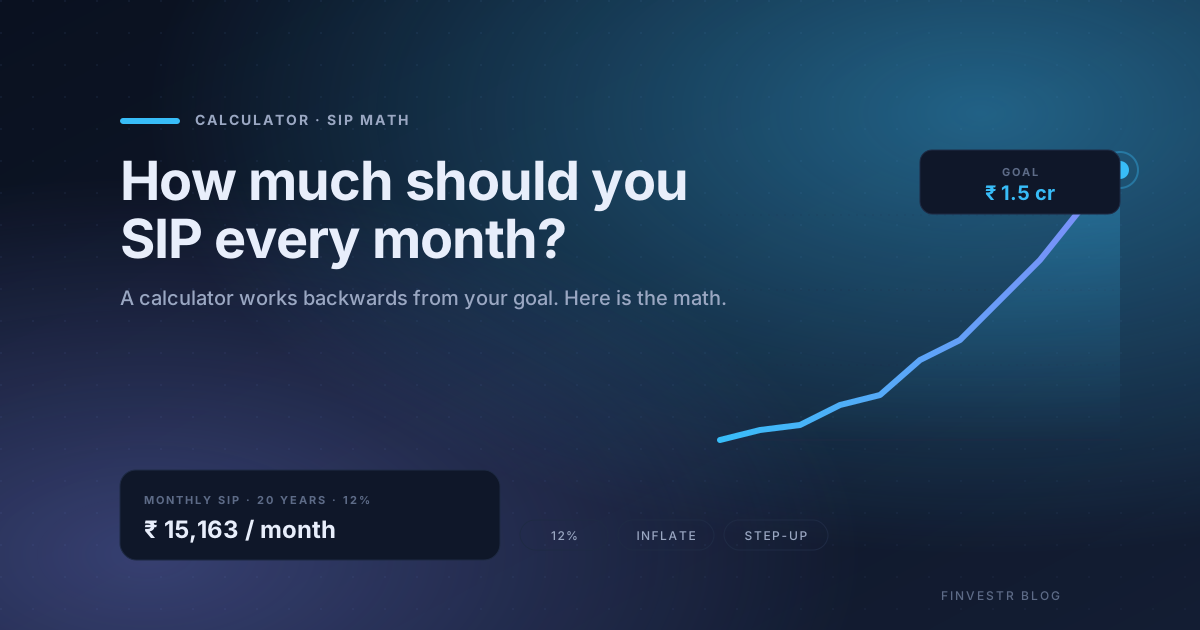
SIP calculator: how much to invest monthly for your goal
A SIP calculator works backwards from your goal. Here is the future-value math behind it, the realistic return and inflation assumptions for India, and how to size the monthly SIP for a retirement or education corpus.
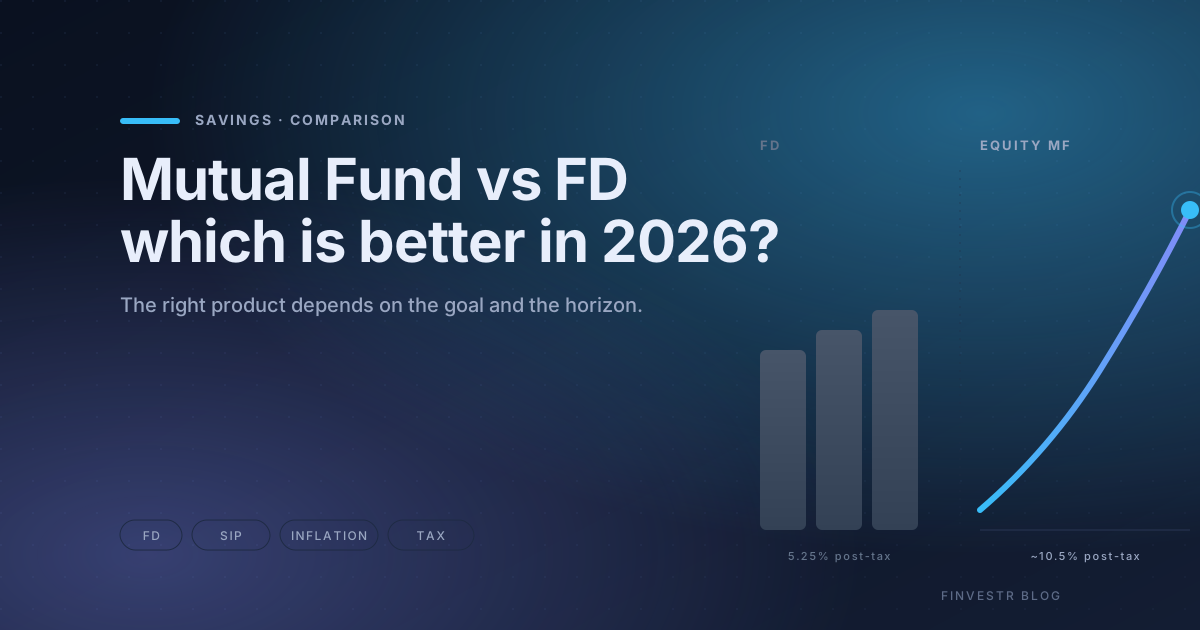
Mutual Fund vs FD: Which is better for you in 2026?
A side-by-side of FDs and equity mutual funds in 2026, with the after-tax return, the inflation-adjusted return, and the right answer for every goal from a 1-year emergency fund to a 15-year retirement SIP.
ELSS vs PPF: Which 80C option is better for you?
A plain-English comparison of the two most common 80C choices, with the lock-in, return, and risk trade-offs laid out side by side.