ELSS vs PPF: Which 80C option is better for you?
A plain-English comparison of the two most common 80C choices, with the lock-in, return, and risk trade-offs laid out side by side.
Every January-March, the same question shows up in every Indian investor's head: where do I put my ₹1.5 lakh to save tax? The two most common answers, ELSS mutual funds and PPF, are completely different tools that happen to share a tax section.
What they have in common
- Both qualify for deduction under Section 80C (combined cap ₹1.5L per financial year)
- Both have a lock-in (ELSS: 3 years, PPF: 15 years)
- Both are tax-free on maturity
That's where the similarities end.
ELSS: equity returns, short lock-in
ELSS (Equity Linked Savings Scheme) is a diversified equity mutual fund with a 3-year lock-in. It invests in stocks, so returns are market-linked.
- Historical returns: 12-15% p.a. over 10+ year horizons (no guarantee)
- Lock-in: 3 years (shortest among all 80C options)
- Risk: Market risk. Your corpus can dip in a bad year
- Best for: Investors with 7+ years to retirement and the stomach for volatility
PPF: government backing, long lock-in
PPF (Public Provident Fund) is a government-backed savings instrument. The interest rate is set every quarter (currently 7.1% p.a.).
- Returns: 7.1% p.a. (set by government, revised quarterly)
- Lock-in: 15 years (partial withdrawal allowed from year 7)
- Risk: Effectively zero. Sovereign backing
- Best for: The debt portion of your portfolio, or investors who can't tolerate any market risk
How to decide
If you can stay invested for 10+ years, ELSS usually wins on returns. A 12% return doubles your money in 6 years; 7.1% takes 10.
If you want zero risk, PPF is fine. But remember: 7.1% barely beats inflation (which runs at 5-6%), so your real return is thin.
The smart move: Use both. PPF for the safe debt allocation, ELSS for equity exposure, both under the same ₹1.5L 80C umbrella.
One important caveat
There's a ₹1.5 lakh cap per financial year across all 80C options combined, not per option. So if you're already paying EPF or a life insurance premium, your ELSS + PPF headroom is smaller than you think.
Use the 80C calculator on FinvestR to see how much room you actually have left.
What to read next
ELSS is one of the first funds most beginners add to their SIP. The full step-by-step for going from zero to your first SIP is in How to start investing in mutual funds in India. For the retirement math the 80C corpus eventually feeds, see How much you actually need to retire in India. The current top-ranked ELSS funds (and every other category) are in the monthly rankings.
Frequently asked questions
Is ELSS riskier than PPF?▾
Yes, materially. ELSS invests in equity markets, so its NAV can fall 20-40% in a bad year. PPF returns are sovereign-guaranteed and never fall below the declared rate. If you cannot stomach watching your 80C corpus drop by a third in a crash, PPF is the safer choice.
Can I take a loan against my PPF?▾
Yes, from year 3. You can borrow against your PPF balance at an interest rate that is 2% above the prevailing PPF rate. ELSS does not offer a loan facility since the units are mutual fund units held in a demat or folio form.
Can I withdraw from ELSS after 3 years?▾
Yes, the ELSS lock-in is 3 years from the date of each SIP instalment, not from the start of the SIP. So if you start a 5-year SIP today, your first instalment is free to redeem in 3 years while the most recent ones are still locked in. PPF allows partial withdrawal only from year 7.
Is ELSS or PPF better for short-term goals?▾
PPF is not suitable for short-term goals either, but at least it offers partial withdrawal from year 7. ELSS units are locked in for 3 years per SIP instalment and equity returns in such a short window can be negative. For any goal under 5 years, keep the money outside both.
Should I split my 80C between ELSS and PPF?▾
Most balanced portfolios do. A common split is 50-50 or 60-40 ELSS-to-PPF depending on your risk tolerance. Put the equity sleeve in ELSS for the upside, and the debt sleeve in PPF for the sovereign guarantee. Both count towards the same 1.5 lakh Section 80C cap.
How is ELSS taxed at redemption?▾
ELSS gains above 1.25 lakh per financial year are taxed at 12.5% as per the post-July 2024 rules. PPF maturity proceeds are entirely tax-free. So even though ELSS is fully EEE (Exempt-Exempt-Exempt) on paper, the LTCG applies once the 1.25 lakh exemption is exhausted across all equity schemes combined.
What happens to my ELSS investment if I move abroad?▾
You can continue holding ELSS in non-resident (NRO) folios, but fresh SIPs require an NRE/NRO bank account and KYC updation. PPF cannot be continued by NRIs - the account is closed on NRI status and the balance is paid out without the tax-free benefit that residents get.
See your portfolio the way it should be seen.
Try the 1-min Goal CheckRelated reading
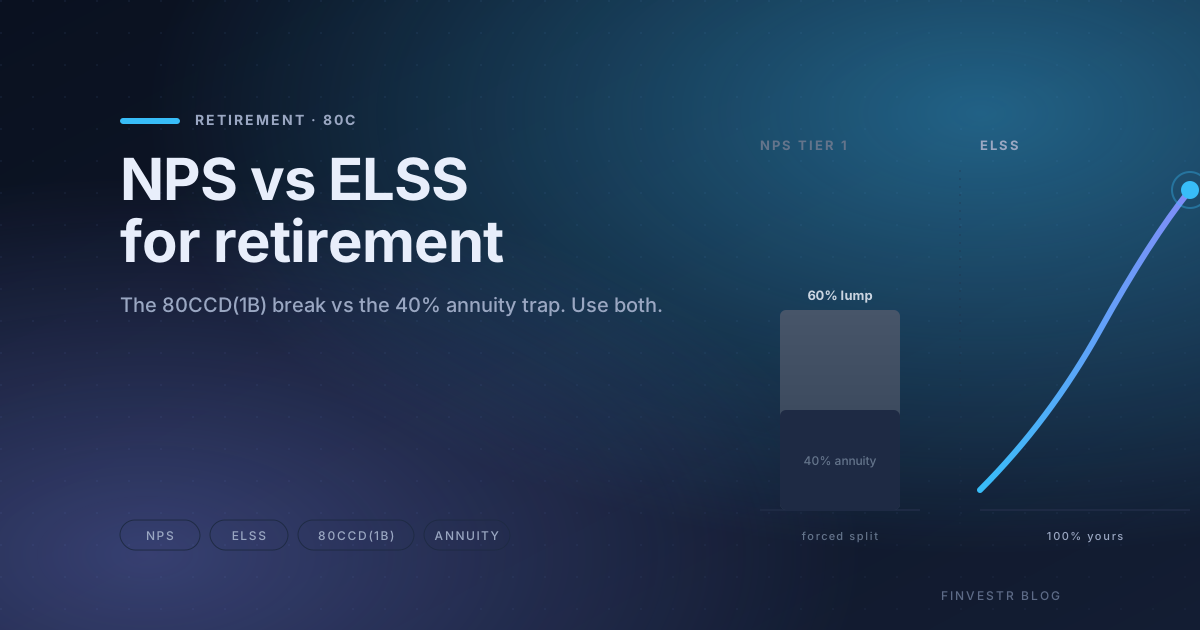
NPS vs ELSS for retirement: which one actually wins?
A side-by-side of NPS Tier 1 and ELSS for retirement: tax breaks, lock-in, returns, the NPS annuity trap, and the right answer for different retirement horizons.
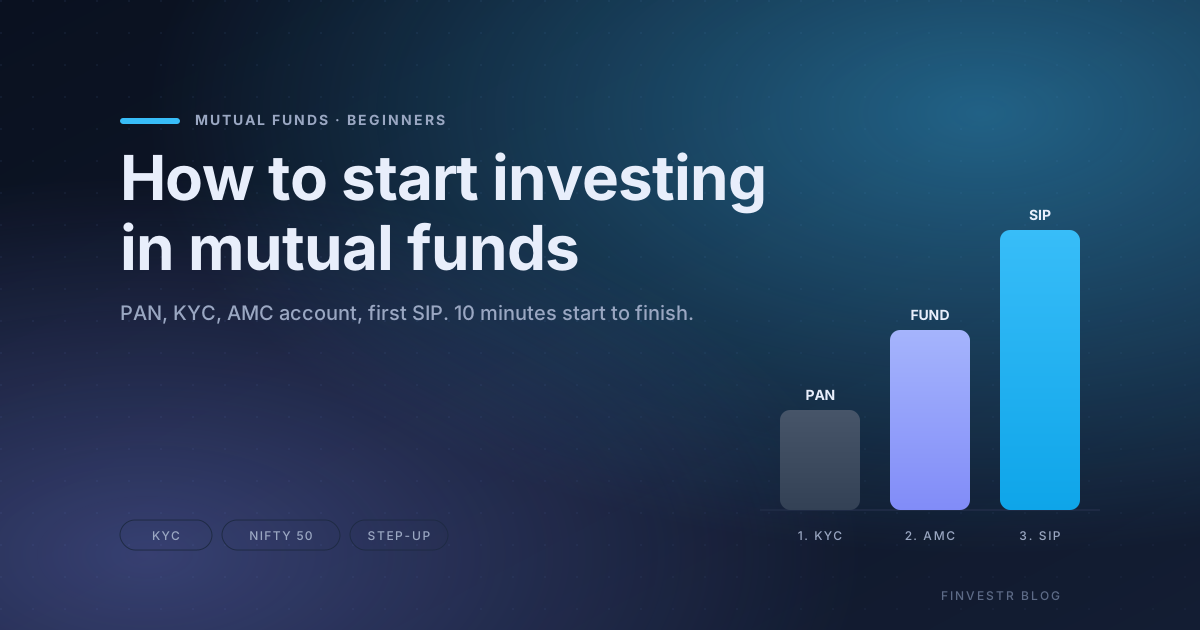
How to start investing in mutual funds in India (2026)
Everything you need to go from zero to your first SIP: KYC, PAN, picking an AMC, choosing a fund, automating the SIP, and the three funds most beginners actually need to start with.

How much do you actually need to retire in India?
A practical breakdown of the math behind a retirement corpus, from expenses to inflation to the SIP that gets you there.