Best mutual funds for 5-10 years: how to pick by horizon
House down payment, wedding, career break: the 5-10 year band is where most Indian goals live. Which fund categories belong there, with the real SIP math.
In this guide
- 1Put a year on the goal first. A house down payment in 5 years and a wedding fund in 8 are different problems. The fund category follows from the date, never the other way around.
- 2Use the 3-year rule to split the band. Under 3 years, money belongs in debt. From 3 years, equity starts to earn its keep. At 5-10 years, the fund must survive a full market cycle.
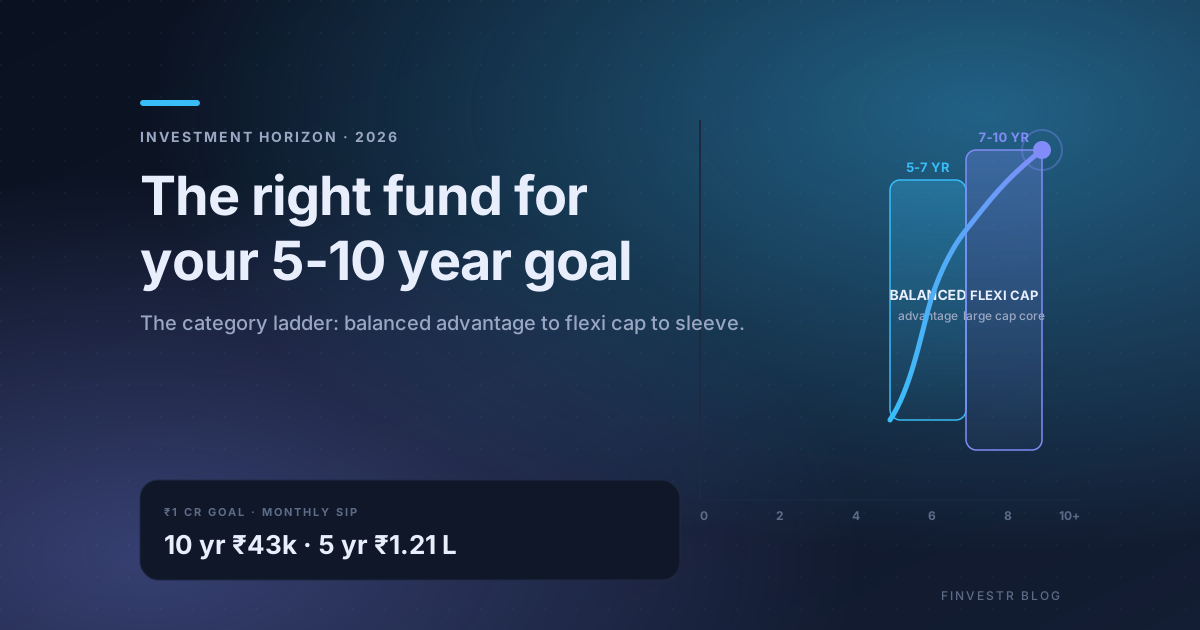
- 3Match the category to the horizon. 5-7 years: balanced advantage or hybrid. 7-10 years: flexi cap or large cap core, with a mid or small cap sleeve. Under 5 years with equity exposure: SIPs only, and size the sleeve small.
- 4Check the SIP math against the goal amount, not against vibes. Use the calculator to find the monthly number that actually gets you there, and adjust the goal date if the number is not affordable.
- 5Re-check the date every year. The horizon shortens by one year for every year that passes, and the fund category that was right at year 7 may not be right at year 4.
House down payment in 5 years. Wedding in 4. A one-year career break in 8. Child education in 12. Almost every Indian investor's life goals land in the 5-10 year band, the window that is too long for a fixed deposit and too short to feel comfortable in pure equity.
The fund industry's answer is not one fund. It is a ladder of categories, each matched to a slice of the horizon. This post lays out the ladder, the reasoning, and the math, using the same calculators that power the FinvestR goal planner.
The first question is not "which fund". It is "which year"
Every mutual fund decision starts with a date. The fund category that fits a 5-year house goal is different from the one that fits a 10-year retirement goal, and picking by category name instead of by calendar is how most mismatched portfolios get built.
Write the goal into a year:
- Under 2 years: emergency fund, money in a liquid fund or short-duration debt
- 4-6 years: wedding, career break, first house
- 5-8 years: house down payment, bigger goals
- 10-15 years: child education
- 20+ years: retirement
The rule of thumb: under 3 years the money belongs in debt, at 5-10 years the fund needs to survive a full market cycle, and at 10+ the compounding does most of the work.
What a 5-10 year window actually requires
This is the part the fund names hide. A 5-year window includes at least one market cycle, and a 10-year window includes at least two. Small caps fell roughly 65% in 2008 and 45% in March 2020, and a 50% fall needs a 100% gain to recover. The fund you pick at year 5 must be able to sit through a 20-40% drawdown and still be there when you actually need the money.
So the first question is not which fund is popular, it is whether you can hold through the drawdown. If the answer is no, shorten the horizon in your own head: a 5-year goal with a fixed deadline is a 3-year goal for allocation purposes, and a 10-year goal with a flexible deadline is a 10-year goal with a safety margin.
The category ladder for the band
5-7 years: balanced advantage and hybrid
The balanced advantage fund (dynamic asset allocation) is the 5-year workhorse. It shifts the equity allocation between roughly 30% and 80% based on a valuation signal, which means it participates in upswings and reduces the size of the down-move. The balanced advantage ranking tracks the top funds, led by the scores from the August 2026 tables. For the aggressive end of the band, an aggressive hybrid fund holds 65-80% equity and works if you can take the drawdown.
7-10 years: flexi cap and large cap
The flexi cap fund is the 10-year workhorse. It can move across large, mid and small caps based on where the manager sees value, which is exactly the freedom a long window rewards. The flexi cap ranking and large cap ranking show the top funds: ICICI Prudential Flexicap Fund, Bank of India Flexi Cap and quant Flexi Cap led the August scores.
The mid and small cap sleeve
A 10-year horizon can absorb a mid or small cap sleeve, but the sleeve has to be sized: 20-30% of the equity combined, small caps alone at 10-15%, and only for the drawdown to be tolerable. The category has compounded fastest over long windows and also fallen hardest.
The math: what the horizon does to the SIP
The same 1 crore target produces very different monthly numbers depending on the horizon. These are the outputs of the same target-corpus calculator used in the /tools SIP tab:
- 10 years at 12%: about ₹43,000 a month
- 8 years at 10% (balanced advantage): about ₹67,800 a month
- 5 years at 12%: about ₹1,21,000 a month
That last row is the whole point. Cramming a 1 crore goal into 5 years does not make the goal smaller, it makes the monthly burden 3 times bigger, and the risk of the drawdown landing in the final year goes up with it. If the SIP number is not affordable, stretch the horizon or shrink the target. The calculator is not a source of guilt, it is a source of information.
The takeaway
The 5-10 year band is where most Indian goals live, and it needs a ladder of categories, not one fund:
- 5-7 years: balanced advantage or hybrid
- 7-10 years: flexi cap or large cap core
- Mid and small cap sleeve: only for 10+ year money, 20-30% combined
- Under 3 years: debt, no equity
Start with the year, then the category, then the fund. The 1-minute goal check does exactly that in the order, and the goal planner shows the SIP math for your own numbers. The monthly rankings give the scored shortlist for whatever category the horizon lands you in.
What to read next
The balanced advantage 2026 shortlist explains the category in detail if your goal lands in the 5-8 year band. For the SIP math behind the numbers above, sip calculator: how much to invest monthly for your goal walks through the reverse calculation. And if the horizon conversation raised the question of mid versus small cap sleeves, mid cap vs small cap has the drawdown and sizing reality. To see who is actually at the top of each category this month, the August 2026 rankings is the full scored table.
Frequently asked questions
Which mutual fund is best for a 5-year investment horizon?▾
A balanced advantage fund is the standard 5-year answer. It shifts equity exposure between roughly 30% and 80% based on valuations, so it rides up years and softens down years. A pure equity fund for exactly 5 years is riskier: a drawdown in year 4 or 5 can force a bad exit.
Which mutual fund is best for a 10-year horizon?▾
A flexi cap or large cap fund is the 10-year workhorse, because the window absorbs drawdowns. Add a mid or small cap sleeve (20-30% combined) only if you can hold through 40% corrections. A 1 crore goal at 12% needs roughly 43,000 a month.
Can I invest in equity mutual funds for 5 years?▾
Yes, only if the 5 years include the full fall. A 5-year equity window usually contains one 20-40% drawdown. If you can hold through it and the goal date can slip 6-12 months, equity works. If the date is fixed, a balanced advantage or hybrid fund is the honest choice.
What is the best fund category for 3 years?▾
Under 3 years, the answer is debt: short-duration or corporate bond funds, or balanced advantage at the aggressive end. The point is not return, it is protecting the principal in the year you need it. A 3-year equity bet is a gamble, since a crash can take 2-3 years to recover.
How much SIP is needed for 1 crore in 10 years?▾
About 43,000 a month at 12% annualised, and roughly 49,000 at 10%. The number depends on the return assumption, which is why the goal planner ties expected return to a risk bucket: aggressive assumes higher return and higher drawdown, balanced assumes lower.
See your portfolio the way it should be seen.
Try the 1-min Goal CheckRelated reading
SIP vs Lump Sum: Which to Choose When Markets Are High
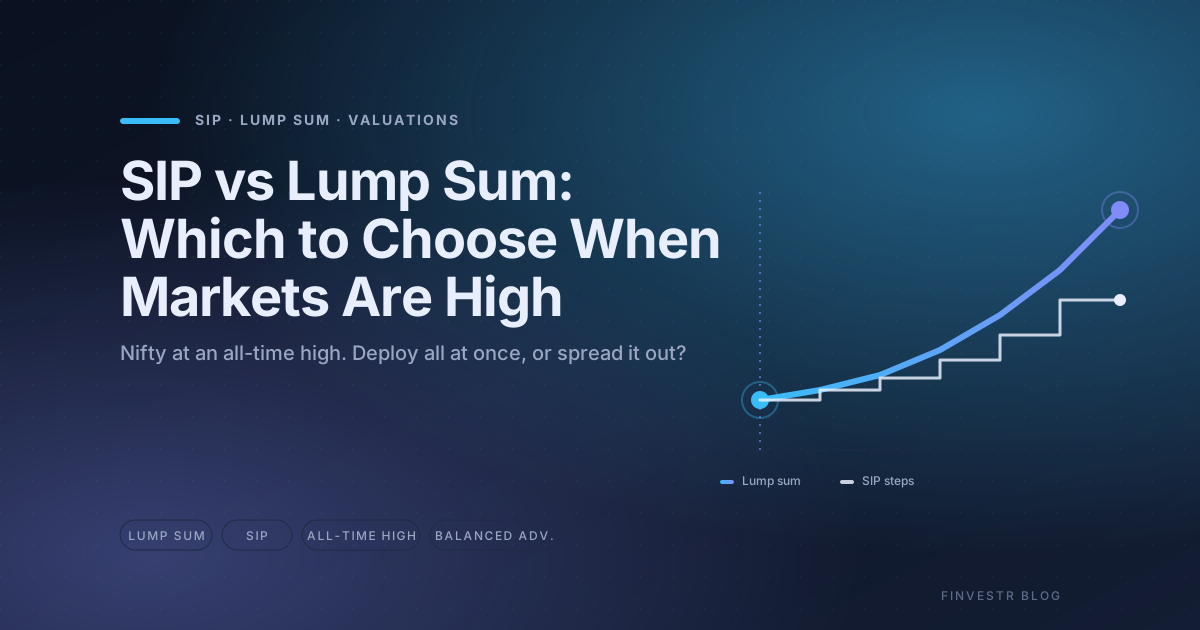
The lump sum vs SIP decision when the market is at an all-time high, with the worked math for rising, flat, and falling-then-rising markets, and the balanced advantage fund as the set-and-forget middle path.
Best Balanced Advantage Funds in India (2026)
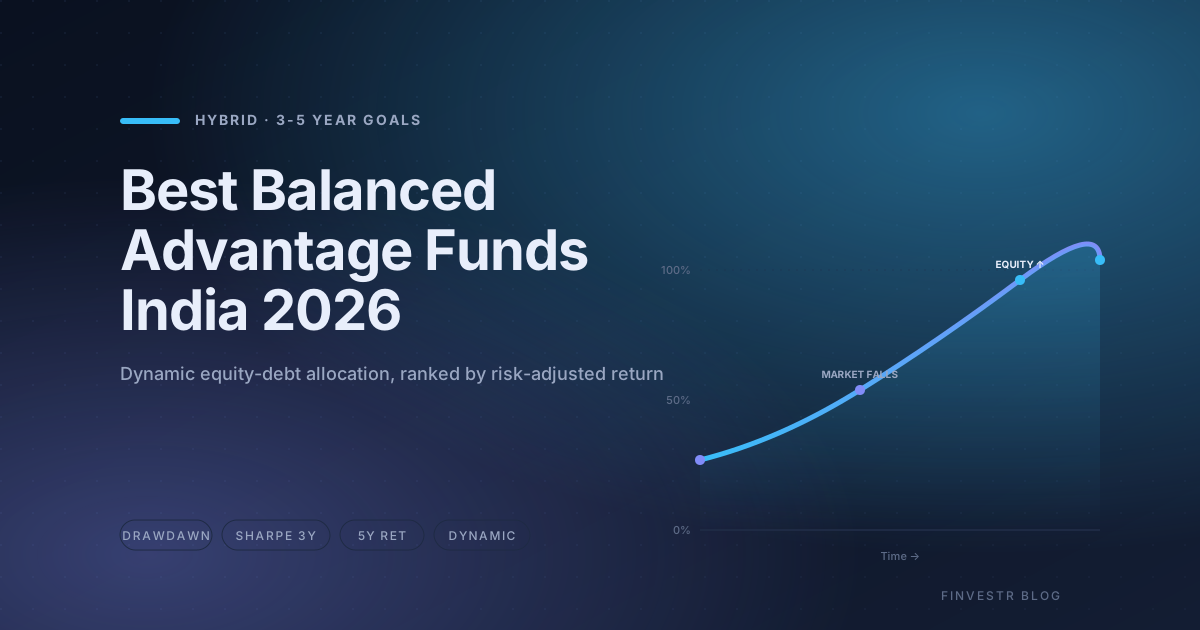
The only SEBI-recognised category with tactical asset allocation. Top picks by risk-adjusted return, drawdown control, and consistency over 3 and 5 year windows.
ELSS vs PPF: Which 80C option is better for you?
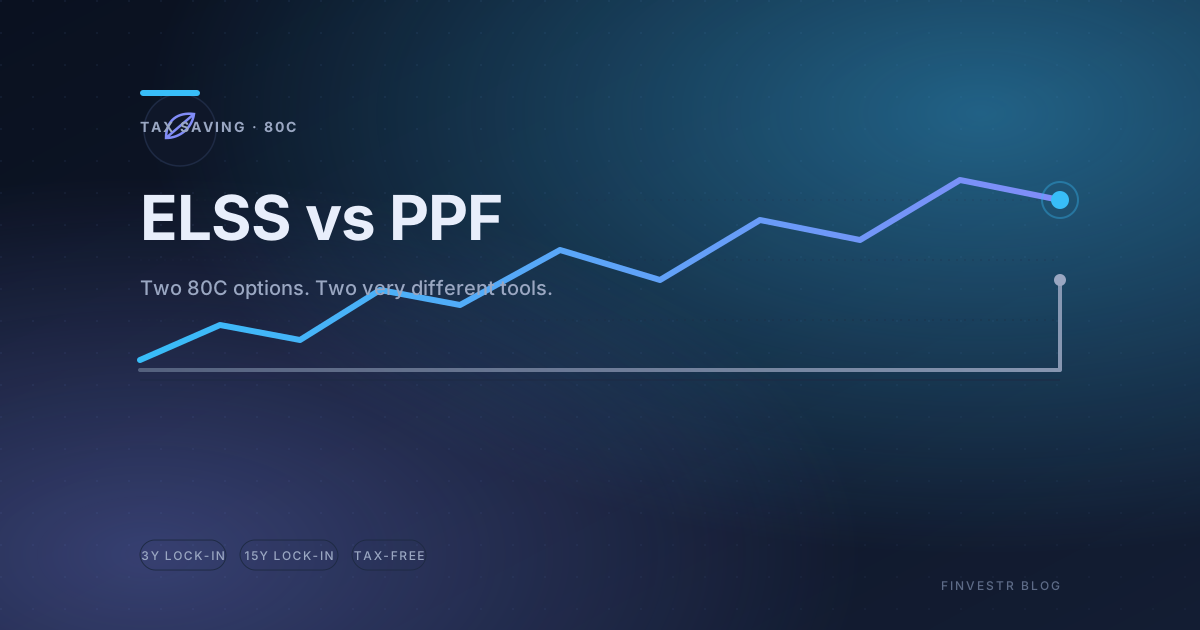
A plain-English comparison of the two most common 80C choices, with the lock-in, return, and risk trade-offs laid out side by side.