Mid cap vs small cap: which fund should you pick in 2026?
Record July inflows into mid- and small-cap funds, and the first large-cap outflow in 30 months. What the trend means, what the risks are, and how to size a SMID sleeve.
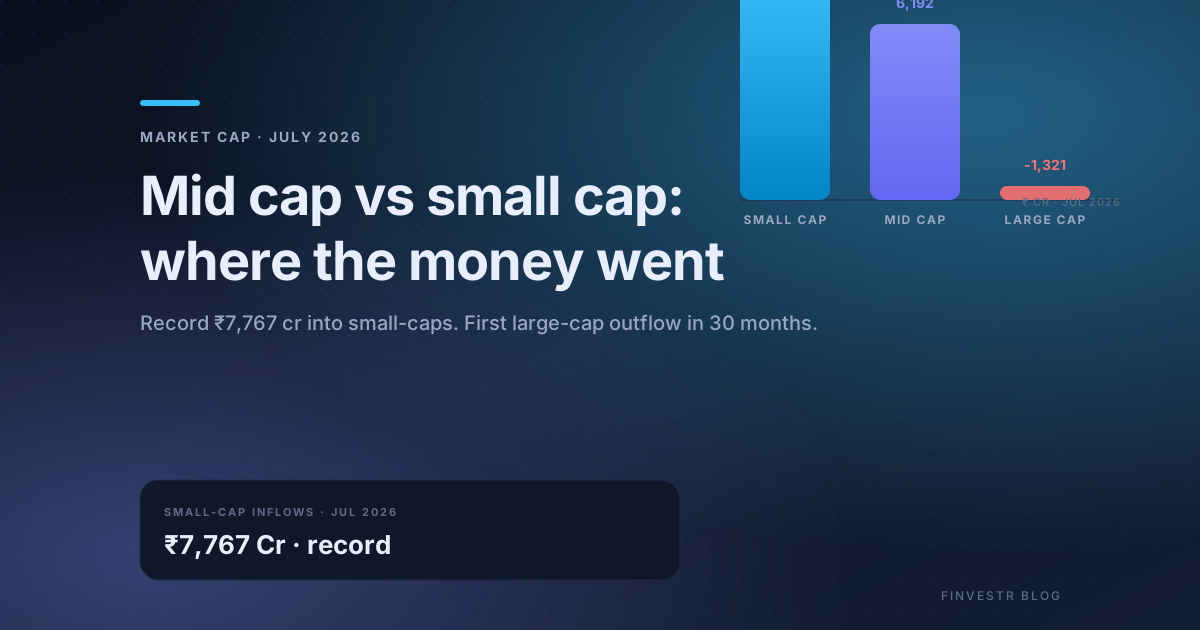
AMFI's July 2026 numbers, released on 11 August, produced the clearest retail-fund story of the year. Small-cap funds took in ₹7,767 crore, the highest monthly inflow ever recorded in the category. Mid-cap funds took ₹6,192 crore. Together, mid and small caps absorbed 56% of every rupee that went into equity mutual funds in July. And at the other end of the ladder, large-cap funds saw their first net outflow in 30 months: ₹1,321 crore left the category.
Record inflows into the riskiest equity categories, and outflows from the safest. Before you decide whether to follow the crowd, it is worth understanding what actually happened, why, and what the historical record says about what happens next.
What July's numbers actually said
The context matters as much as the headline. Total equity fund inflows actually slowed in July, dropping 14.75% month on month to ₹24,697 crore, even as equity funds logged their 65th consecutive month of positive inflows. So July was not a month of more money entering equity funds. It was a month of the same money moving down the market-cap ladder.
Category by category, from the AMFI data:
- Small-cap funds: ₹7,767 crore in, the highest monthly figure ever, up 39% from June's ₹5,601 crore.
- Mid-cap funds: ₹6,192 crore, up about 2% from June.
- Flexi-cap funds: ₹4,709 crore, down from ₹5,231 crore in June.
- Large-cap funds: ₹1,321 crore out, the first outflow since December 2023.
- SIPs: ₹31,961 crore, still growing, 0.56% up on the month before.
July's index moves explain part of it. The Nifty Smallcap 250 rose 0.82% in July, the Nifty Midcap 150 rose 1.51%, and the Nifty 50 rose 1.77%. Nothing dramatic in any direction, which is precisely the point: the flows did not chase a small-cap melt-up. The rotation happened because large-caps had already under-delivered.
Why the money is moving down the cap ladder
The standard market view, echoed by fund houses in their July commentary, is that large-cap returns have been flat to disappointing for roughly two years. When the Nifty 50 delivers single-digit annual returns while mid and small caps have corrected hard and now look cheaper, retail money drifts down the ladder looking for the next cycle.
Add the structural layer: SIP flows keep rising regardless of direction, ₹31,961 crore in July alone, and that money is disproportionately routed into mid and small cap funds by the SIP set. A monthly SIP into a small-cap fund is not a market call. It is an autopilot allocation that keeps buying through both up and down months.
None of this makes the inflows wrong. It makes them an observation, not an endorsement. The same rotation played out in 2021, when mid and small caps took record inflows near their highs, and again in 2024. What happened next in both episodes was a sharp drawdown in exactly those categories.
What a small-cap drawdown actually feels like
This is the section the flow headlines will never show you. Small-cap funds fell roughly 65% peak to trough in the 2008 crash and about 45% in March 2020. Mid-cap funds fell about 42% in 2020 and 65% in 2008. The 2022-23 correction took another 25-30% off small-caps.
The recovery math is brutal. A 50% fall needs a 100% gain just to get back to even, and the calendar does not care about your entry point. A small-cap fund can give back two or three years of returns in six months, then take three or four years to recover them. That is the actual experience of holding this category, not the 15% annualised line from the factsheet.
The question is not whether small-caps will beat large-caps over the next decade. Over long windows they historically have. The question is whether you can hold through the 40-60% drawdowns that come with the extra return, and whether the money is invested for long enough to recover. If the answer to either is no, the record inflows are not for you.
Mid cap vs small cap: the decision framework
Forget the flow data for a moment. The decision between mid and small cap funds rests on four variables, in this order:
1. Horizon. Mid-caps need 7-10 years to work; small-caps need 10-15. The category's extra return is earned by surviving its cycles, and you cannot survive a cycle you did not plan for.
2. Portfolio role. Both are growth sleeves, not first funds. The core of an equity portfolio should stay in large-cap or flexi-cap funds. Mid and small caps sit on top of that core.
3. Size. Most balanced portfolios keep mid and small caps combined at 20-30% of total equity, with small caps alone at 10-15% for a standard risk profile. Going higher is a volatility decision, not a return decision.
4. Entry method. SIPs, not lump sums. A SIP spreads the entry across the volatility that makes the category scary; a lump sum concentrates it.
One more rule for the record-inflow moment: if you are buying because last month's number was big, you are buying the wrong reason. Buy because the horizon and the sleeve size fit your plan.
The 2026 shortlist from the August rankings
If the framework fits, the next step is picking funds, and that is where our August 2026 rankings do the work. The tables below are the top 5 in each category from the August edition (Regular plans, period ending 31 July 2026), scored on risk-adjusted returns, drawdown control, and consistency.
Mid cap
| Rank | Fund | 1Y | 3Y | 5Y | Score |
|---|---|---|---|---|---|
| 1 | Invesco India Midcap Fund | 10.23% | 24.02% | 19.00% | 69.08 |
| 2 | Motilal Oswal Midcap Fund | -1.65% | 18.97% | 21.48% | 62.59 |
| 3 | HSBC Midcap Fund | 17.85% | 23.35% | - | 61.53 |
| 4 | ICICI Prudential MidCap Fund | 14.02% | 21.85% | 16.97% | 57.80 |
| 5 | WhiteOak Capital Mid Cap Fund | 14.20% | 21.56% | - | 54.85 |
Small cap
| Rank | Fund | 1Y | 3Y | 5Y | Score |
|---|---|---|---|---|---|
| 1 | Bank of India Small Cap Fund | 17.19% | 20.49% | 17.80% | 75.59 |
| 2 | Invesco India Smallcap Fund | 13.42% | 21.98% | 18.33% | 71.10 |
| 3 | Bandhan Small Cap Fund | 8.06% | 25.23% | 17.91% | 66.83 |
| 4 | ITI Small Cap Fund | 13.40% | 23.07% | 15.32% | 66.24 |
| 5 | Union Small Cap Fund | 17.46% | 17.41% | 15.82% | 59.85 |
The score is a sorting signal, not a buy signal. Two funds within five points of each other are interchangeable for retail purposes. The full mid-cap ranking and the full small-cap ranking show the top 10 with month-on-month movement, so you can see which funds are improving rather than just well-known.
Note the pattern worth reading: the top-scored small-cap fund, Bank of India Small Cap at 75.59, is not the best 1Y performer on the list, and the top-scored mid-cap fund, Invesco at 69.08, pairs a modest 1Y with the strongest 3Y in its table. The score rewards consistency and drawdown control, which is exactly the lens this post argues for.
The takeaway
July 2026 set a record: ₹7,767 crore into small-cap funds, the first large-cap outflow in 30 months, and 56% of equity flows into mid and small caps.
The trend is real. The risk is real too: small-caps have historically fallen 45-65% in bad years, and a 50% fall needs a 100% gain to recover.
The framework: 10-15 year horizon for small-caps, 7-10 for mid-caps, 20-30% of equity combined, small-caps capped at 10-15%, and SIPs instead of lump sums. Buy because the plan fits, not because the inflow number was big.
What to read next
The 1-minute goal check is the fastest way to see whether a mid or small cap sleeve actually fits your goal and horizon. If you are new to picking funds, start with how to start investing in mutual funds in India before adding categories. Already holding several funds? The over-diversification check shows whether a new fund would just duplicate what you own. And for the market-level story behind these flows, read why the market keeps rising while foreign investors sell.
Frequently asked questions
Why did small-cap funds get record inflows in July 2026?▾
AMFI's July 2026 data showed small-cap funds taking in Rs 7,767 crore, the highest monthly inflow ever. Drivers: two years of weak large-cap returns, value appearing in mid and small caps after the correction, and record SIP flows of Rs 31,961 crore feeding riskier categories.
Is it too late to invest in small-cap funds now?▾
No one can time the top, and this post will not try. The framework matters more than the entry point: a 10-15 year horizon, a small-cap sleeve capped at 10-15% of your equity, and SIPs instead of a lump sum. If that profile fits, start and stay invested through the drawdowns.
What is the difference between mid-cap and small-cap funds?▾
Market capitalisation rank. Mid-cap funds hold companies ranked roughly 101-250 by market cap; small-cap funds hold those ranked below 250. Small-caps historically compound faster, around 15-17% a year over 10-15 years versus 12-13% for the Nifty 50, but fall harder in bad years.
How much should I invest in mid and small cap funds?▾
Most balanced portfolios keep mid and small caps combined at 20-30% of total equity, small caps alone at 10-15% for standard risk profiles. The rest sits in large-cap or flexi-cap core funds. Only investors with a 10+ year horizon and a working volatility budget should go higher.
What is the worst small-cap drawdown in history?▾
Small-caps fell about 65% peak to trough in 2008 and 45% in March 2020. A 50% fall needs a 100% gain just to get back to even. That is the real cost of chasing last year's small-cap return without the horizon to sit through the recovery.
Should I redeem my large-cap fund and move to small-cap?▾
No. Rotating out of large-caps because they had an outflow month is chasing flows, not building a portfolio. Large-cap funds still make the core of most equity portfolios. If you want more small-cap exposure, add it gradually with a SIP and keep the core intact.
See your portfolio the way it should be seen.
Try the 1-min Goal CheckRelated reading
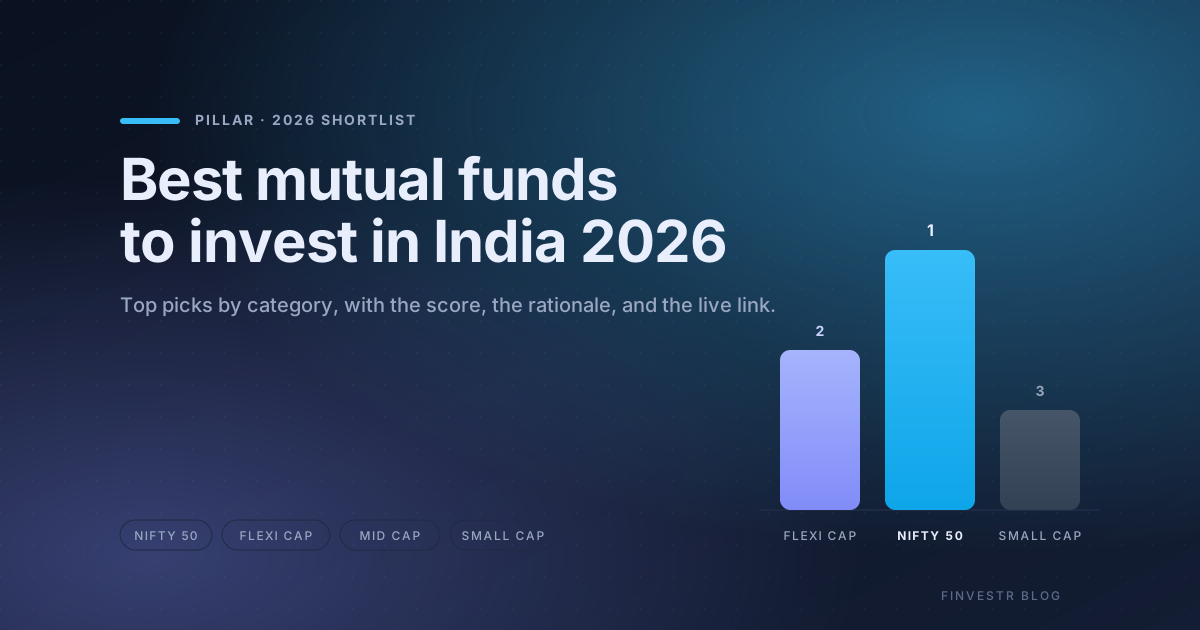
Best mutual funds and index funds to invest in India (2026)
The 2026 shortlist across every category that matters for an Indian investor: large cap, flexi cap, mid cap, small cap, ELSS, index, debt, liquid. With the score, the rationale, and the live rankings link for each.
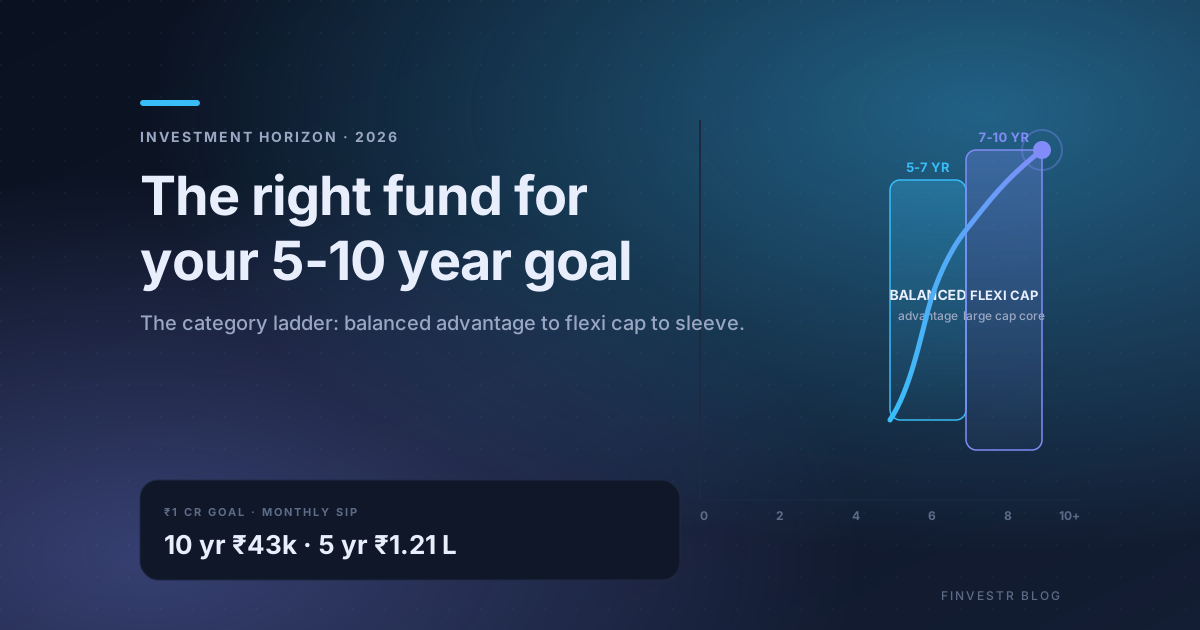
Best mutual funds for 5-10 years: how to pick by horizon
House down payment, wedding, career break: the 5-10 year band is where most Indian goals live. Which fund categories belong there, with the real SIP math.
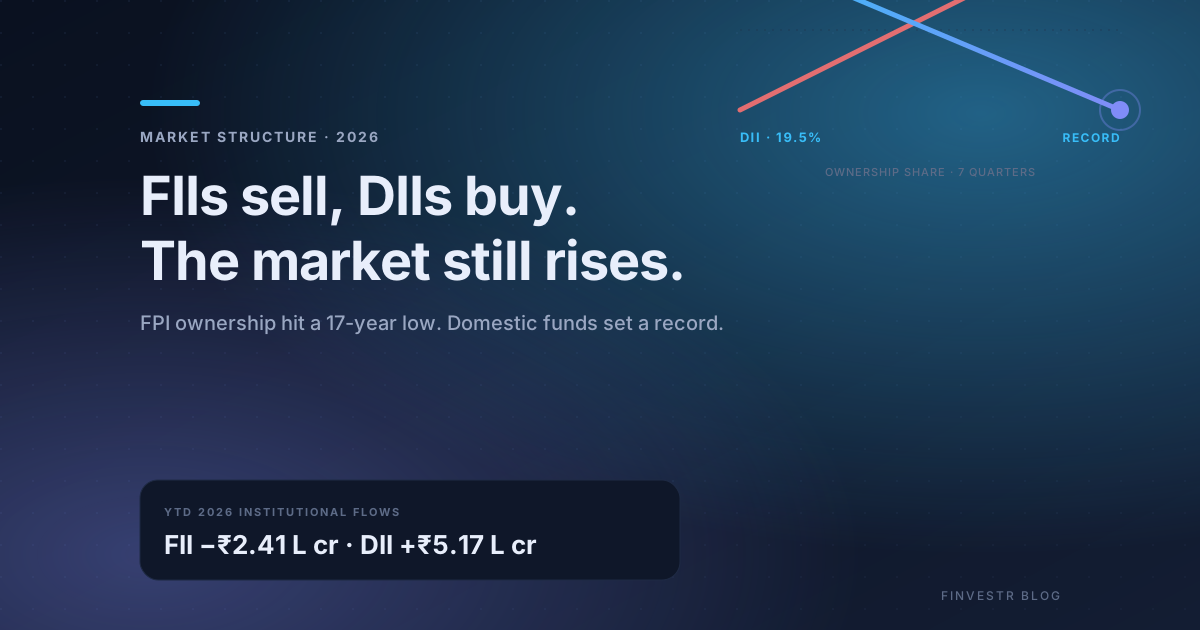
FII selling, DII buying: why the market is still rising
FPI ownership hit a 17-year low while domestic mutual funds set records. The FII vs DII story of 2026, and what it means for your own SIPs.