FII selling, DII buying: why the market is still rising
FPI ownership hit a 17-year low while domestic mutual funds set records. The FII vs DII story of 2026, and what it means for your own SIPs.
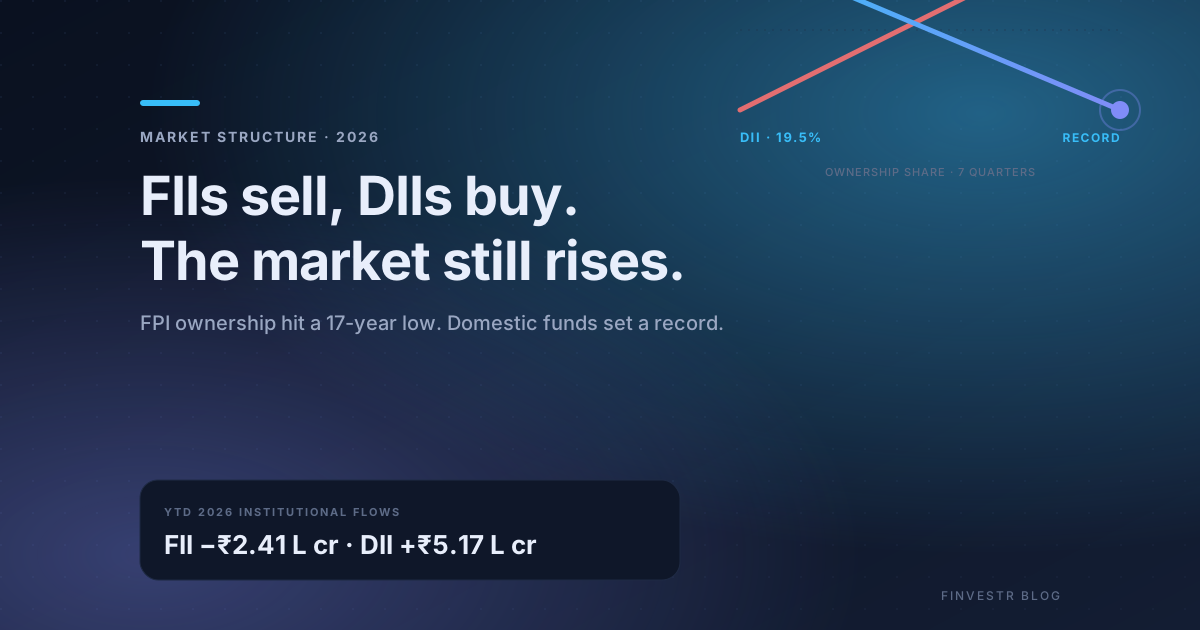
Here is the number that has confused Indian investors all year. Foreign institutional investors (FIIs, the overseas funds, pensions and sovereign money that buy Indian shares through the FPI route) have pulled roughly ₹2.41 lakh crore out of Indian equities in 2026. That already exceeds the ₹1.66 lakh crore they withdrew in all of 2025, which itself was a record year of selling.
And the Nifty is still within a whisker of its all-time high.
If foreign money is the market's brain, as the old headlines insist, the market should be falling. It is not. The reason is that the brain changed. Domestic institutional investors (DIIs: Indian mutual funds, insurers, and retirement money like EPF and NPS) have bought roughly ₹5.17 lakh crore of Indian equities in the same period. The market is no longer hostage to foreign flows, and the ownership data confirms it.
What FII and DII actually mean
Every trading day, exchanges publish two provisional numbers: net FII buying or selling, and net DII buying or selling, in the cash market. The media runs these as daily scorecards, but the labels hide the real difference, which is structural.
FIIs are discretionary. A foreign fund decides to overweight or underweight India based on global rates, currency, valuations and its own mandates, and the money moves in lumps. When the US dollar strengthens or Indian valuations look stretched relative to other markets, FIIs sell. Their flows can turn on a single macro print.
DIIs are automatic. Indian mutual funds are fed by SIP instalments, which hit ₹31,961 crore in July 2026 alone, plus EPF/NPS contributions and insurance premiums that arrive monthly regardless of market direction. Most of that money is deployed into equities on a schedule. DIIs do not decide whether to be in the market; they are always in the market, buying whether the Nifty is at 22,000 or 24,600.
That asymmetry is the whole story of 2026.
The 2026 numbers, in order
The quarterly ownership data, published by the NSE and reported in August 2026, shows the handover in its cleanest form:
- Foreign ownership fell to 15.1% of NSE-listed companies in the June 2026 quarter, a 17-year low, down 74 basis points quarter on quarter.
- Domestic mutual funds rose to a record 11.6%, their twelfth consecutive quarter of higher ownership.
- Total DII share reached 19.5%, ahead of FPI ownership for the seventh straight quarter, the longest such stretch since 2001.
- Retail is the quiet third force: direct and indirect retail ownership hit a record 19.3%, and household equity wealth reached ₹90.3 lakh crore.
- The flow numbers match: FIIs net-sold ₹2.41 lakh crore YTD 2026 while DIIs net-bought ₹5.17 lakh crore. In the Nifty 50 specifically, FPI free-float ownership fell from 43.2% in September 2023 to 35.4% by June 2026.
One nuance the daily headlines will not give you: FIIs were actually net buyers in July and early August 2026, investing ₹20,200 crore in July and ₹12,921 crore in the first week of August, before turning back to net selling in the second week. The daily and monthly direction flips constantly. The ownership trend, which moves in quarters, is the durable signal.
Why domestic money keeps coming
The DII buying is not a fair-weather phenomenon, and that is what makes the handover structural rather than cyclical.
SIPs are the engine. Retail SIP flows hit ₹31,961 crore in July 2026, and SIP accounts now number in the crores. SIP assets have grown to around a fifth of the industry's total AUM. Every month that money redeploys into equities automatically, into funds whose mandates require them to stay invested.
Retirement money never stops. EPF and NPS contributions are deducted from salaries and invested on a schedule. Insurers take in premiums monthly and deploy into equities per their allocations. This money does not read FII flow headlines.
Household savings are shifting. The slow, multi-year move of Indian household savings from gold and property into financial assets has not reversed. The 19.3% direct and indirect retail ownership record is the visible edge of that shift.
The result is that when FIIs sell, the bid comes from a domestic base that is larger, more automatic and more patient than at any point in Indian market history. That is not a forecast of any direction. It is a statement of structure.
What the handover means for you
Four practical takeaways, none of which is a market prediction.
First, ownership change is slow-moving and does not forecast next week's Nifty. The handover happened over seven quarters. It tells you who owns the market, not where it goes tomorrow.
Second, your SIPs are part of this wave. Every instalment you make is a drip into the domestic institutional pool that now anchors the market. You are not a spectator to the DII story; you are one of its contributors.
Third, ignore the daily FII prints. FIIs were net buyers in July, net sellers in mid-August, and net sellers for the year. A single day's number proves nothing about your portfolio. The monthly and quarterly trends are the only signal worth reading.
Fourth, the risk to watch is not FII selling. It is what happens if the automatic domestic flows slow: if SIP cancellations rise, or if household savings shift direction. The market's anchor is now domestic, so the domestic saver's behaviour matters more than any foreign fund's.
The takeaway
Foreign investors pulled ₹2.41 lakh crore out of Indian equities in 2026, and the market did not care. The reason is structural: DIIs bought ₹5.17 lakh crore, foreign ownership fell to a 17-year low of 15.1%, and domestic mutual funds set a record 11.6% for twelve straight quarters.
The market's anchor is domestic now, powered by ₹31,961 crore of monthly SIPs and retirement money that never stops.
Your move is simple: keep your SIPs, stay invested for your horizon, and ignore the daily FII headlines. They describe a flow, not your portfolio.
What to read next
The 1-minute goal check shows whether your current SIPs are actually on track for your goals, independent of what FIIs did this week. If you want to know exactly what you own before the next headline, the CAS statement guide walks through reading your consolidated holdings. For the fund side of this story, the August 2026 rankings show which categories are leading on risk-adjusted returns. And if the record small-cap inflows are making you wonder about your own allocation, mid cap vs small cap has the decision framework.
Frequently asked questions
What does FII stand for and what do they buy?▾
Foreign institutional investors (FIIs, also called FPIs) are overseas funds and pension money buying Indian shares through the FPI route. In 2026 they have been net sellers of about Rs 2.41 lakh crore year to date, more than the Rs 1.66 lakh crore pulled out in all of 2025.
What does DII stand for?▾
Domestic institutional investors: Indian mutual funds, insurance companies, and retirement funds like EPF and NPS. Their buying is largely automatic: SIP instalments, EPF/NPS contributions and premium inflows keep coming regardless of what the market does on any given day.
Why is the market rising when FIIs are selling?▾
Because domestic money now outweighs foreign money. Year to date in 2026, DIIs have bought about Rs 5.17 lakh crore while FIIs sold Rs 2.41 lakh crore. Foreign ownership fell to a 17-year low of 15.1%, while domestic funds set a record 11.6%.
Is foreign money leaving India permanently?▾
No one can forecast that. The data shows structure, not direction: FPI ownership fell for seven straight quarters to a 17-year low, and DIIs have held a bigger stake for seven consecutive quarters, the longest stretch since 2001.
Should I sell my mutual funds because FIIs are selling?▾
No. Your SIPs are part of the domestic wave that now anchors the market, and flow headlines flip almost daily. What matters is your horizon and goal, not what FIIs did on a Tuesday. Staying invested while others panic has been the rewarded side in 2026.
How much of the Indian market do foreign investors own now?▾
About 15.1% of NSE-listed companies as of the June 2026 quarter, a 17-year low. Within the Nifty 50, FPI free-float ownership fell from 43.2% in September 2023 to 35.4% by June 2026. Domestic mutual funds now hold a record 11.6% of the market, up for twelve straight quarters.
See your portfolio the way it should be seen.
Try the 1-min Goal CheckRelated reading
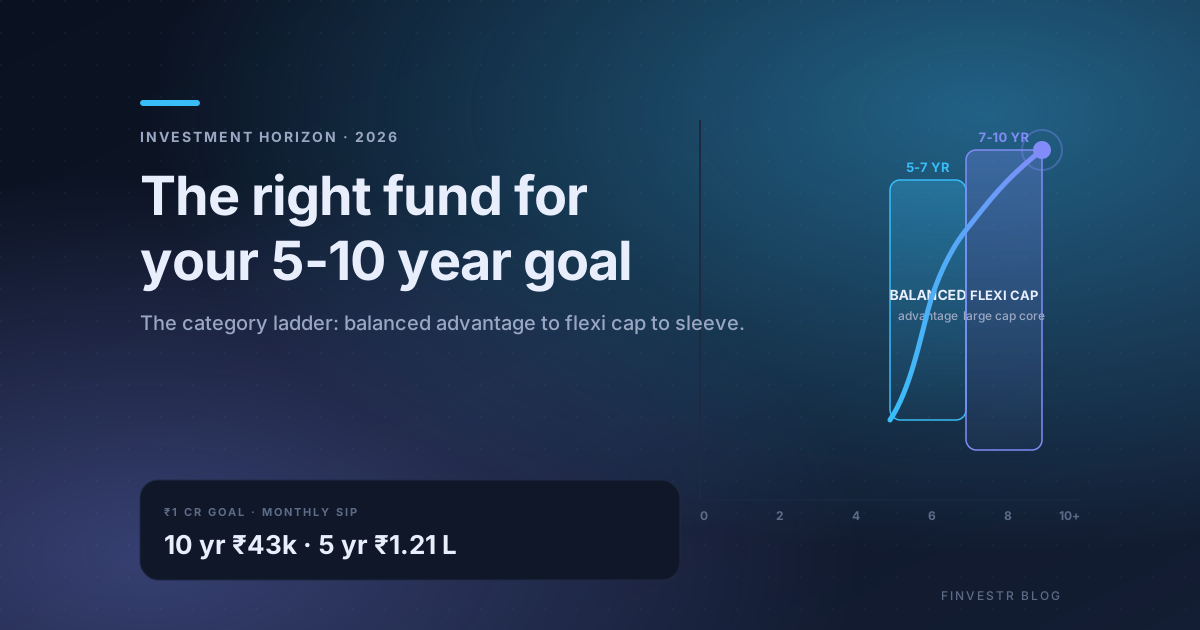
Best mutual funds for 5-10 years: how to pick by horizon
House down payment, wedding, career break: the 5-10 year band is where most Indian goals live. Which fund categories belong there, with the real SIP math.
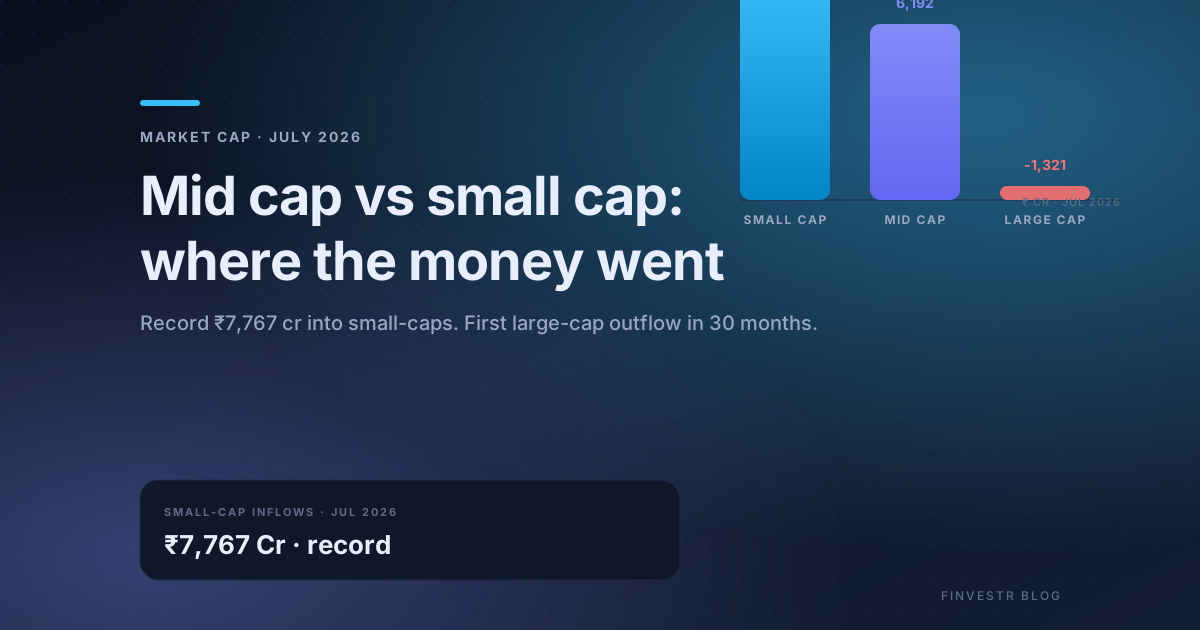
Mid cap vs small cap: which fund should you pick in 2026?
Record July inflows into mid- and small-cap funds, and the first large-cap outflow in 30 months. What the trend means, what the risks are, and how to size a SMID sleeve.

SIP vs Lump Sum: Which to Choose When Markets Are High
The lump sum vs SIP decision when the market is at an all-time high, with the worked math for rising, flat, and falling-then-rising markets, and the balanced advantage fund as the set-and-forget middle path.