How to Read Your CAS Statement in India (2026 Guide)
A plain-English walkthrough of the Consolidated Account Statement: what each section means, how to read the valuation and XIRR numbers, the CAMS vs Kfintech difference, and how to spot overlapping funds and concentrated AMC exposure.
In this guide
- 1Get your CAS. The Consolidated Account Statement is generated monthly by the registrars (CAMS and Kfintech) and the depositories (CDSL and NSDL). You can download it from MFCentral, CAMSOnline, Kfintech, or your AMC's portal, or have it emailed to you every month.
- 2Read the header and investor block. The first page tells you who the statement is for, the period it covers, and the total value across all your accounts.
- 3Read the folio and scheme details. Each mutual fund you hold appears under a folio number, with the scheme name, unit balance, NAV, and the registrar that services it.
- 4Read the valuation section: cost, current value, and XIRR. This is the part that tells you whether you are actually making money.
- 5Scan the transaction and dividend history. This section lists every purchase, redemption, switch, and dividend payout in the period.
- 6Spot overlap, concentration, and unnecessary schemes. The CAS is the raw material for the checks that tell you if your portfolio is doing real work.
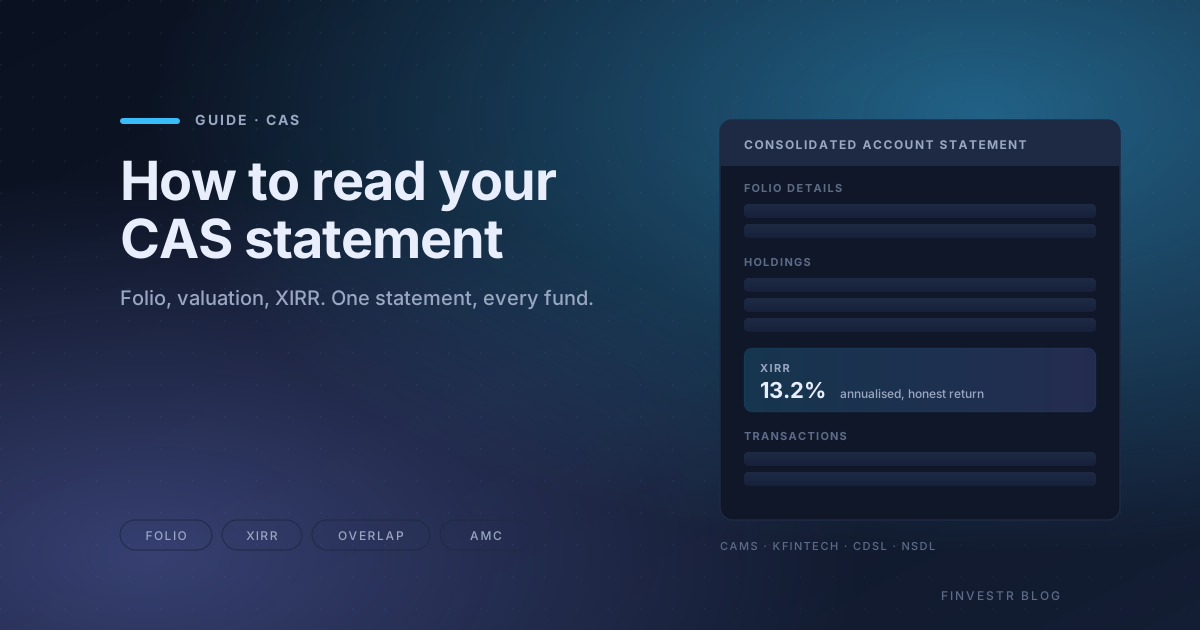
If you have been investing in mutual funds for more than a few months, you have a CAS sitting in your inbox. It arrives every month, it is password-protected, and most people open it, glance at the total value at the top, and close it. That is a mistake. The CAS is the single most useful document an Indian mutual fund investor owns, and almost nobody reads it properly.
This post is the plain-English walkthrough. By the end you will know what each section means, how to read the valuation and XIRR numbers, the difference between the CAMS and Kfintech formats, and how to spot the overlapping funds and concentrated AMC exposure that quietly drag on your returns.
What a CAS actually is
A CAS, or Consolidated Account Statement, is a monthly statement that pulls every mutual fund folio you hold into one document. It is generated by the two registrars, CAMS and Kfintech, and the two depositories, CDSL and NSDL. If you hold funds with five different AMCs, you get one statement, not five. If you also hold demat shares, insurance, or NPS, those appear too.
The point of the CAS is consolidation. Instead of logging into five AMC portals to see what you own, you open one PDF. That consolidation is also why the CAS is the right starting point for any portfolio review, and why the FinvestR-Agent is built around it.
The header and investor block
The first page tells you who the statement is for and when it was valued.
- The 'As on' date is the valuation date for the whole statement, usually the last business day of the month. Every number in the statement is as of this date.
- The investor block shows your name, PAN, email, and mobile. Check that these are correct, because they are what the registrar uses to match your folios.
- The summary line lists the total market value across your mutual funds, demat holdings, insurance, and NPS. This is the number most people quote as 'my portfolio value'. It is a snapshot, not a return.
Folio and scheme details
This is the heart of the statement. Each mutual fund you hold appears under a folio number.
A folio is the account number a single AMC keeps for you. One folio can hold several schemes, and one scheme can appear across several folios if you bought it through different channels. For each scheme, the CAS shows:
- Unit balance, the number of units you own.
- NAV date and NAV, the price at which the units are valued.
- Registrar, CAMS or Kfintech, the transfer agent that services the scheme.
- ISIN, the unique code for the scheme.
The folio block is where you first spot redundancy. If the same scheme appears in two folios, you are holding the same fund in two accounts, which is usually worth consolidating.
The valuation section: cost, current value, and XIRR
This is the part that tells you whether you are actually making money.
For each scheme, the CAS shows the cost value (what you invested) and the current market value. The difference is your absolute gain or loss. Then comes the number most people skip: the XIRR.
XIRR is the annualised return that accounts for the timing and size of every cash flow. Each SIP instalment, each lumpsum, each switch, each redemption is a cash flow, and XIRR solves for the rate that makes the present value of all inflows equal the present value of all outflows. It is the only honest number for a portfolio built with monthly cash flows.
The difference matters. A fund that shows a 14% absolute gain over three years is not the same as a fund with a 14% XIRR. The absolute gain ignores time and assumes you put the whole amount in on day one. The XIRR is the number to compare against the Nifty, and it is the number the FinvestR-Agent computes per lot and at the portfolio level.
Transaction and dividend history
This section lists every purchase, redemption, switch, and dividend payout in the period.
Read it for two things. First, confirm that every SIP instalment you expected actually landed, and that no redemption or switch happened that you did not authorise. Second, check the dividend payouts. If you reinvest dividends, the reinvested units show up as a purchase, which is why the unit balance can grow even when you have not added money.
A clean transaction history is the fastest way to catch a missed instalment or an unauthorised move. It is also the raw material for the XIRR calculation, because the return depends on exactly when and how much you put in.
CAMS vs Kfintech: the two formats
Your CAS is generated by one of the two registrars, depending on which one your AMCs have appointed. CAMS and Kfintech are the transfer agents that maintain investor records for the mutual fund industry.
The two formats differ in layout and column order, but the information is the same. A CAMS statement and a Kfintech statement both carry the folio, scheme, valuation, and transaction sections. The practical difference is that you may receive statements from both if your funds are split across AMCs that use different registrars. The FinvestR-Agent parses both formats, so you can upload either and get the same analysis.
Spotting overlap, concentration, and unnecessary schemes
The CAS is the raw material for the checks that tell you if your portfolio is doing real work. Three checks, all of which you can run by hand from the statement:
Count the funds and the categories. A typical Indian retail portfolio needs 4 to 6 funds in 2 to 3 SEBI categories. If you hold more than 6 funds across more than 4 categories, you are likely over-diversified, paying expense ratios for exposure you could get with fewer funds.
Check AMC exposure. Add up the value of your holdings by AMC. If a large share sits with one fund house, you are betting on one fund manager's view of the market, even if the funds are in different categories. A practical rule is no more than 2 funds per AMC in the core portfolio.
Check for overlap. Look for the same scheme in multiple folios, and for two funds that track the same index. Two Nifty 50 funds are one bet, not two. The FinvestR-Agent computes stock-level overlap for every pair of funds and flags any pair that is functionally one fund.
The takeaway
Your CAS is not a receipt. It is a diagnostic. The header tells you the valuation date, the folio block tells you what you own and where, the valuation section tells you whether you are making money, and the transaction history tells you whether your money moved the way you expected.
The two numbers that matter are the XIRR and the AMC exposure. The XIRR is the honest return, and the AMC exposure is the hidden concentration. Everything else on the statement is supporting detail.
If you want to skip the manual work, upload your CAS to the FinvestR-Agent. It parses the PDF in your browser, computes the XIRR per lot and at the portfolio level, and runs the overlap, concentration, and AMC exposure checks automatically. You get the diagnosis without reading a single folio number.
What to read next
- Is your mutual fund portfolio over-diversified? - the four checks that tell you when enough funds is too many, all of which start with your CAS.
- XIRR vs CAGR vs Absolute Returns - the three numbers on your CAS, and which one actually tells the truth about your portfolio.
- How to start investing in mutual funds in India - the flow from zero to your first SIP, with the CAS explained along the way.
- The monthly mutual fund rankings - the live top funds in every category, refreshed monthly, for when you decide to consolidate.
Frequently asked questions
What is a CAS statement?▾
A CAS, or Consolidated Account Statement, is a monthly statement that consolidates all your mutual fund folios, demat holdings, insurance, and NPS into one document. It is generated by the registrars CAMS and Kfintech and the depositories CDSL and NSDL.
How do I get my CAS statement?▾
Register on MFCentral (the AMFI portal) with your PAN and email, and the CAS is emailed to you every month. You can also download it from CAMSOnline, Kfintech, or your AMC's portal.
How often is a CAS generated?▾
Every month, as of the last business day. You can also request an on-demand CAS for any period, which is useful when you want a fresh snapshot before a review or a tax filing. The monthly statement is the one most investors should read.
What information is in a CAS?▾
The investor block (name, PAN, email, mobile), the statement period and valuation date, a summary of total value, folio and scheme details (unit balance, NAV, registrar, ISIN), the valuation section (cost, current value, XIRR), and the transaction and dividend history.
How is XIRR calculated on a CAS?▾
XIRR is the annualised internal rate of return that accounts for the timing and size of every cash flow: each SIP instalment, lumpsum, switch, and redemption. It solves for the rate that makes the present value of all inflows equal the present value of all outflows.
What is the difference between CAMS and Kfintech?▾
CAMS and Kfintech are the two registrars and transfer agents (RTAs) that service mutual funds in India. Each AMC appoints one of them to maintain investor records. Your CAS may be generated by either, depending on which registrar your AMCs use.
Why does my CAS show a different value than my app?▾
Different apps use different valuation dates and return formulas. The CAS is valued as of the last business day of the month, while an app may show a live value. For returns, most apps show absolute return at the top. The XIRR on your CAS is the honest one.
See your portfolio the way it should be seen.
Try the 1-min Goal CheckRelated reading
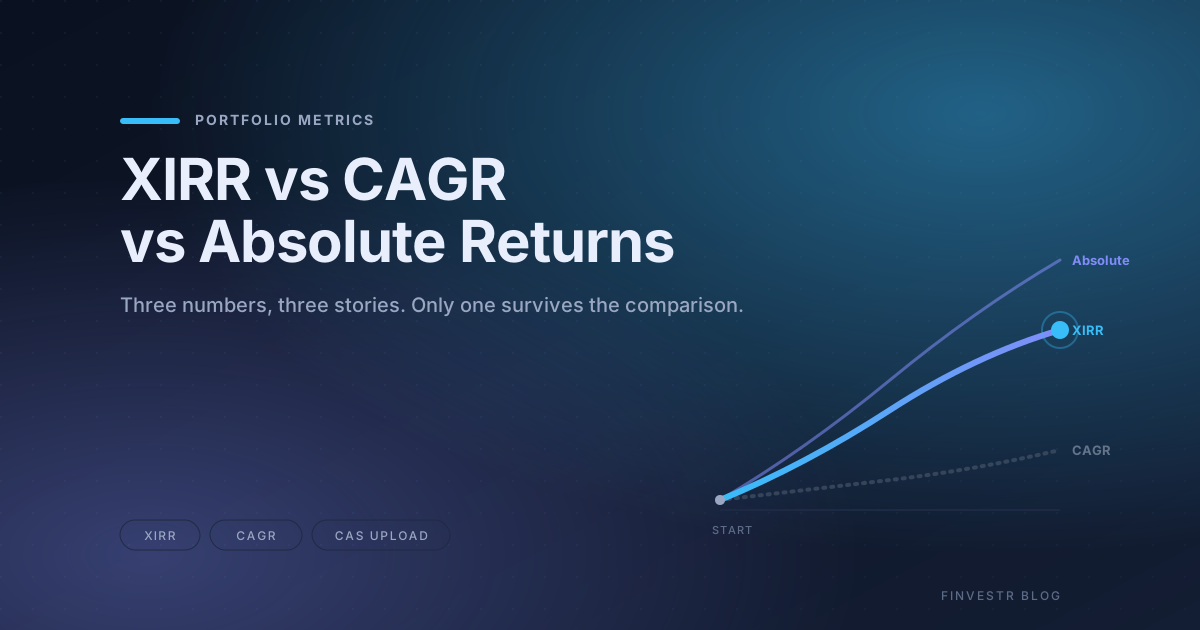
XIRR vs CAGR vs Absolute Returns: what your statement hides
Why the 14% on your CAS statement is not the return you actually earned, what XIRR and CAGR really measure, and which one to use when you compare your portfolio to the Nifty.
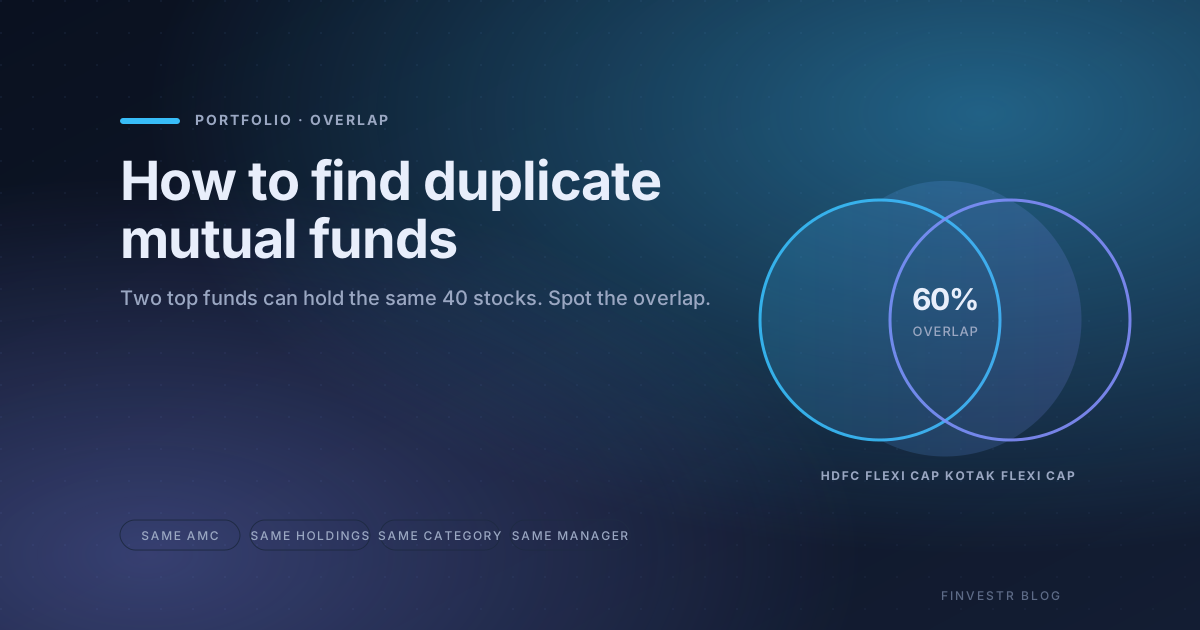
How to Find Duplicate Mutual Funds in Your Portfolio
The four ways duplicate funds sneak into an Indian portfolio, how to spot them by AMC, category, top holdings, and fund manager, and how to consolidate to a leaner, cheaper set.

Is your mutual fund portfolio over-diversified?
The four practical checks for over-diversification: count the funds, look at AMC overlap, measure category overlap, and check if your top 3 funds are doing all the work. With a worked example and a fix.